The Intersection of PHA and MOC In Ensuring Safety in Industry Processes
Introduction
In high-risk industries like manufacturing, oil and gas, pharmaceuticals, and chemical processing, safety is more than just regulatory compliance, it is a core element of operational resilience. As processes become more complex and subject to tighter standards, managing risk effectively is essential, especially during times of change.
Organizational shifts such as facility expansions, process modifications, or equipment upgrades often introduce new hazards or alter existing risk profiles. To manage these challenges, companies rely on two critical safety processes: Process Hazard Analysis (PHA) and Management of Change (MOC). When used together, these tools provide a comprehensive approach to identifying, assessing, and mitigating risks throughout the lifecycle of process design and change.
PHA vs MOC: What’s the Difference?
Process Hazard Analysis (PHA) and Management of Change (MOC) are both integral parts of a comprehensive process safety management (PSM) system. Although they share a common goal of preventing accidents and maintaining safe operations, they serve distinct purposes.
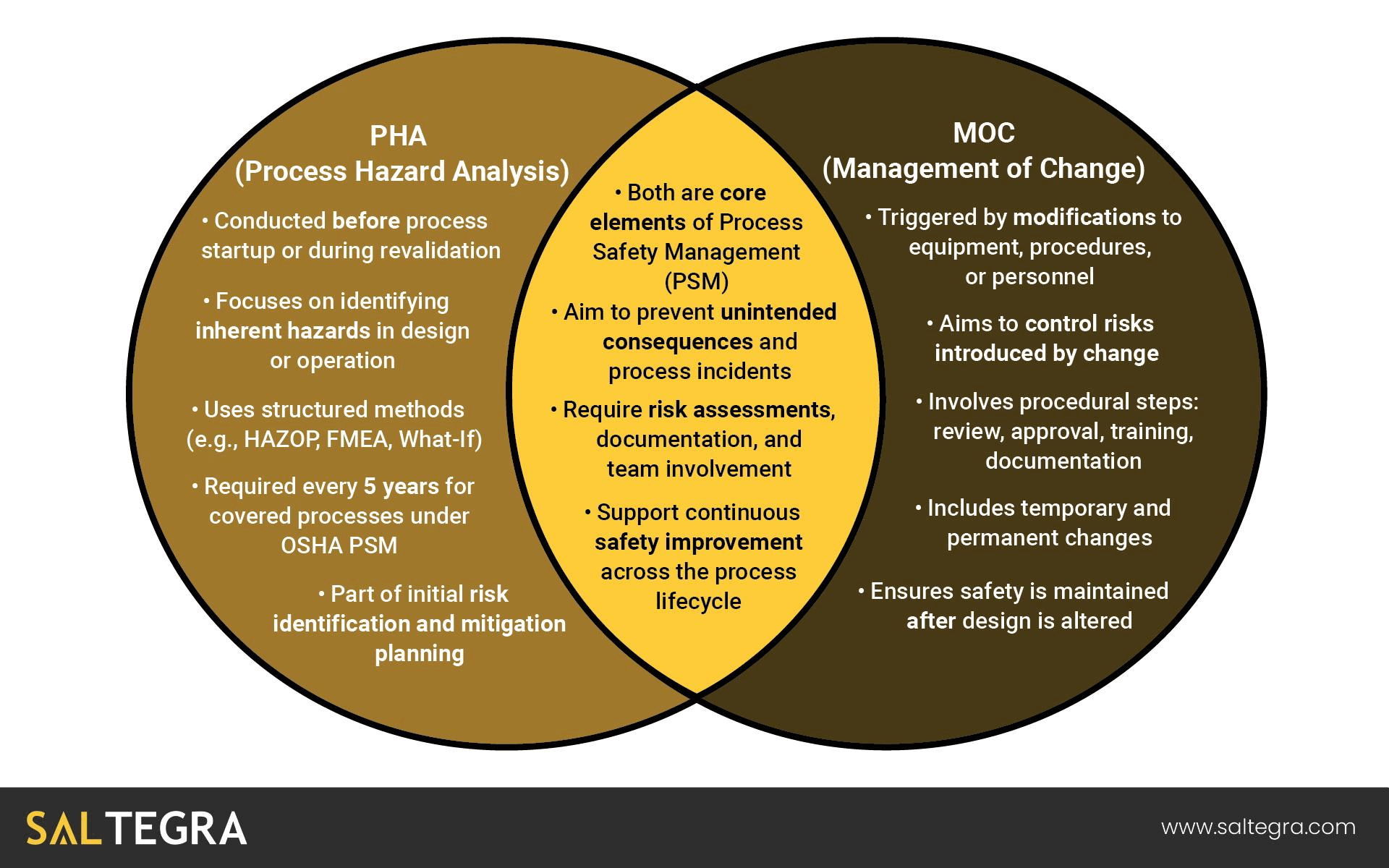
PHA is a proactive, systematic approach used to identify and assess potential hazards in industrial processes. It is typically performed during the design phase of a new process, before startup, or as part of routine safety revalidations. The goal is to uncover risks, evaluate the adequacy of existing safeguards, and recommend improvements before any incident can occur. Standard PHA methodologies include HAZOP, What-If Analysis, and FMEA.
In contrast, MOC is a procedural system that comes into play when a facility or process is modified. These changes may include equipment upgrades, chemical substitutions, operational changes, or personnel adjustments. MOC ensures that proposed modifications are carefully reviewed, potential risks are assessed, and necessary training or documentation updates are completed before the change is implemented.
In essence, PHA is focused on identifying hazards in a system’s original design or routine operation, while MOC is used to manage the risks introduced by changes. They are closely linked many MOC reviews trigger a targeted PHA to evaluate the potential safety impact of proposed changes. When combined, these two systems ensure safety is preserved across the full lifecycle of a process.
How PHA and MOC Work Together
When integrated, PHA and MOC form a powerful safety management strategy. Embedding PHA within the MOC workflow allows organizations to evaluate risks before changes are implemented. For example, if a new chemical is introduced or a piece of equipment is modified, a focused PHA helps assess how the change could affect the existing safeguards or create new risk pathways.
Together, these two processes offer a structured approach to identifying, managing, and controlling risks across both design and operational changes. Below is a breakdown of how this integration strengthens safety:
Ensuring Continuity in Safety Measures
A well-structured Management of Change (MOC) process that incorporates PHA ensures no safety control is weakened or bypassed during process changes. PHA offers a detailed hazard evaluation, while MOC mandates procedural steps for approval and implementation. This seamless handoff ensures that no critical safeguard is missed, preserving risk control throughout the change.
Regulatory Compliance
OSHA and other regulatory bodies require organizations to analyze hazards and assess safety risks related to process operations and changes. Conducting a PHA as part of MOC helps fulfill regulatory requirements, supports documentation and traceability, and demonstrates due diligence. This integration not only ensures compliance but also builds internal accountability.
Risk Assessment Before Process Change
One of the most important outcomes of combining PHA and MOC is the ability to perform detailed risk assessments before changes are executed. Whether changing operating parameters or equipment configurations, early assessment helps teams identify new hazards, adapt procedures, train personnel, and implement additional controls, reducing the risk of incidents after changes go live.
Common Challenges in Implementing PHA and MOC
Implementing Process Hazard Analysis (PHA) and Management of Change (MOC) effectively is critical to ensuring operational safety. While both are essential components of a robust process safety system, organizations often encounter avoidable pitfalls during execution, particularly when attempting to integrate them.
Despite their value, combining PHA and MOC can present challenges that, if left unaddressed, may compromise their effectiveness. Recognizing and resolving these issues early is key to ensuring both systems function as intended and contribute meaningfully to risk reduction and safety performance.
Inadequate Documentation and Follow-Through
Many organizations fall short in tracking and completing the actions identified during PHA or MOC processes. Without proper documentation and closure of tasks, critical safety improvements may be overlooked, increasing the risk of non-compliance and accidents.
Lack of Communication Between Teams
Effective implementation requires input from multiple departments: engineering, operations, maintenance, and safety. When communication is siloed, key risk information may be lost or misinterpreted, resulting in inconsistent decision-making and incomplete risk evaluations.
Failure To Conduct PHA in the Early Stages
PHA is most effective when performed at the earliest stages of process or project planning. Organizations that delay hazard reviews during project management or rely on them only as part of reactive MOC steps often miss the opportunity to eliminate risks by design, leading to costly modifications and reduced operational safety.
To overcome these issues, organizations must promote a culture of proactive safety, enforce structured workflows, and ensure strong leadership oversight.
Looking to strengthen your PHA and MOC processes?
Saltegra Consulting provides expert facilitation and proven frameworks to help you close safety gaps and reduce risk across the process lifecycle. Contact us today to build a safer, more resilient operation.
Conclusion
Process Hazard Analysis (PHA) and Management of Change are both essential for protecting people, processes, and performance in high-risk industries. While they serve distinct functions, their true value is realized when used together as an integrated system for managing both baseline and change-related risks.
By conducting PHA early and embedding it into MOC workflows, organizations can ensure safety continuity, regulatory compliance, and operational resilience. However, to make this integration effective, challenges like incomplete documentation, poor communication, and delayed assessments must be addressed with strong leadership and cross-functional collaboration.