Why Integrating Process Hazard Analysis (PHA) in the Design Phase Matters
Introduction
Safety must begin at the earliest stages of process development in high-risk industries such as oil and gas, pharmaceuticals, and chemical manufacturing. One of the most effective tools for preventing incidents is Process Hazard Analysis (PHA), a structured, systematic method for identifying and evaluating potential risks before they materialize.
When integrated into the design phase, Process Hazard Analysis (PHA) helps organizations eliminate hazards early, design safety into the system, and avoid expensive rework or operational failures later. More than a compliance measure, PHA is a strategic asset that supports safer, more efficient, and more cost-effective operations from day one.
The Role of Process Hazard Analysis in Process Safety
Process safety focuses on preventing catastrophic events caused by unintentionally releasing hazardous substances. These events can lead to fires, explosions, toxic exposure, or environmental damage, often with significant consequences for people and operations.
PHA is central to this goal, offering a reliable framework to systematically assess how deviations from intended process conditions might lead to harm and how to prevent or mitigate those outcomes. It goes beyond regulatory expectations to become a proactive safety practice, guiding the design, construction, and operation of safer facilities.
PHAs also foster collaboration. By bringing together engineers, safety professionals, and operations personnel during the design phase, organizations build a shared understanding of risk and a stronger safety culture from the outset.
The Benefits of Conducting a PHA in the Early Design
Implementing PHA early in the project lifecycle offers advantages that shape both safety and performance outcomes:
Regulatory Compliance
Performing a Process Hazard Analysis (PHA) during the design phase ensures that facilities handling highly hazardous chemicals meet applicable safety regulations, such as OSHA’s Process Safety Management (PSM) standard. Early compliance avoids delays, rushed modifications, and costly inspection failures while allowing design teams to embed required safeguards into the project blueprint.
Operational Efficiency
When hazards are addressed early, design teams can make smarter decisions about process layout, equipment selection, and control systems. This leads to fewer revisions, shorter startup times, and more stable operations. Facilities that integrate safety upfront also spend less time dealing with reactive maintenance and unplanned downtime.
Enhanced Safety and Risk Mitigation
Early PHA allows teams to evaluate high-risk scenarios before installing equipment, such as overpressures, chemical releases, or fires. Hazards can be engineered out or mitigated using solutions like relief valves, automated shutdowns, or physical barriers. Addressing these issues on paper is significantly more cost-effective than making corrections during or after construction.
Multidisciplinary collaboration during early PHA also ensures that safeguards are practical, effective, and aligned with actual operating conditions.
PHA Methodologies to Use
Various methodologies can be used to conduct PHA depending on the project’s complexity, design maturity, and specific goals. During early design, choosing the right method ensures that risks are evaluated appropriately, even with limited process information.
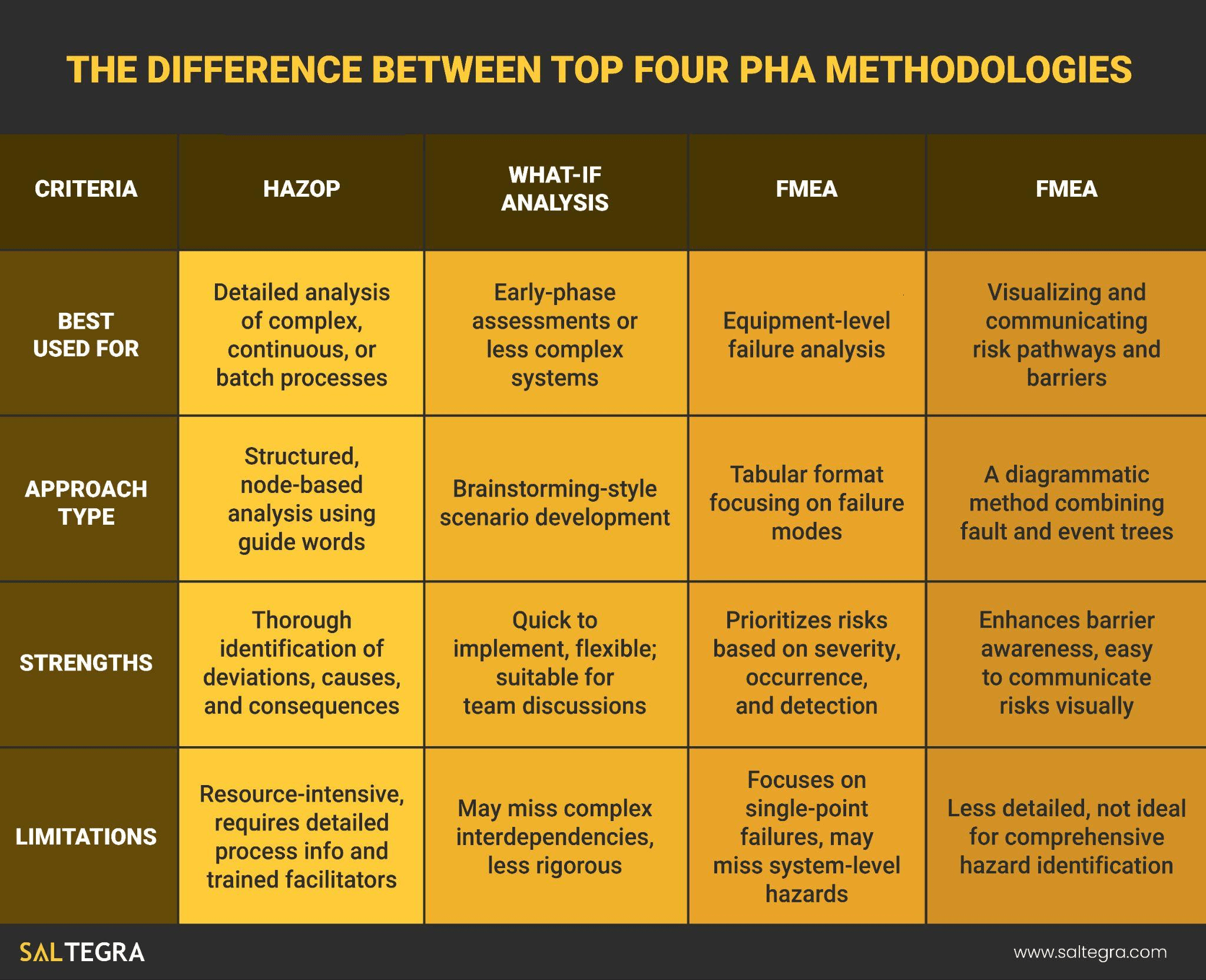
Each methodology has unique advantages. HAZOP (Hazard and Operability Study) is best suited for detailed reviews of established process designs and is widely used in the chemical industry due to its structured and systematic approach.
In contrast, a What-If Analysis as a PHA methodology offers greater flexibility and is particularly effective during the early design stages or in cases where system documentation is still limited. FMEA (Failure Modes and Effects Analysis) is ideal for assessing equipment-level reliability and identifying potential maintenance-related risks, making it a valuable tool in ensuring long-term system performance.
Bowtie Analysis, on the other hand, provides a visual representation of threats, barriers, and consequences, making it especially effective for communicating risks during training sessions, audits, or stakeholder reviews.
Understanding the strengths of each of these methodologies enables safety leaders to select the most appropriate approach or combination of approaches based on the complexity, scope, and maturity of their project.
Conclusion
Integrating Process Hazard Analysis (PHA) during the design phase is one of the most impactful decisions a chemical processing company can make. It allows organizations to proactively identify and eliminate hazards before they are built into operations, ensuring regulatory compliance, reducing costly modifications, and fostering a safer, more efficient work environment from the very start.
The effectiveness of early-stage PHA lies not only in timing but also in methodology. Whether using HAZOP for in-depth analysis, What-If Analysis for flexible early reviews, FMEA for equipment reliability, or Bowtie for clear risk communication, each method offers distinct strengths. By selecting the right approach or a strategic combination, organizations can tailor their analysis to the complexity and maturity of their project, laying a solid foundation for long-term process safety.
If you’re planning a new facility or modifying an existing one, don’t wait until operations begin to think about safety. Contact Saltegra Consulting today to discover how our expert-led PHA facilitation services can help you design for safety from day one and build safer, more resilient operations for the future.