
Most Common Process Safety Management (PSM) Compliance Gaps To Look Out For
Introduction
A gap assessment identifies differences between an organization’s current and desired state, highlighting areas where performance or systems fall short. It compares practices to benchmarks like industry standards or regulations and develops an action plan to address these gaps, which are crucial for changes such as certification or compliance.
In Process Safety Management (PSM) in the USA, a gap assessment reveals areas where safety systems don’t align with standards. It highlights deficiencies in processes, procedures, and controls, improving safety, reducing risks, and ensuring compliance.
Regular PSM evaluations are essential after changes in processes or regulations, helping identify new risks, ensure compliance, and improve safety practices.
Why Perform Process Safety Management Gap Analysis?
Conducting a Process Safety Management (PSM) gap analysis is critical for ensuring a safe process in an organization. The key importance of performing a PSM gap analysis includes:
- Identifying and Addressing Weaknesses
A PSM gap analysis helps pinpoint hazards, outdated policies, and non-compliance with safety regulations. Organizations can prioritize corrective actions by identifying these weaknesses, ensuring a safer work environment, and reducing risks. This supports both hazard identification and risk management. - Enhancing Compliance and Safety Systems
A gap analysis ensures an organization complies with process safety management guidelines for compliance, including evolving regulations such as OSHA and ISO 45001. It also assesses whether current safety systems and tools are suitable for the organization’s needs, helping avoid violations and improving the overall safety culture. - Optimizing Resources and Efficiency
By identifying specific gaps in the safety program, organizations can better allocate resources—time, manpower, and finances—to critical areas of improvement. This ensures efficient use of resources and avoids wasting efforts on unnecessary measures. - Fostering Continuous Improvement and Safety Culture
Regular Process Safety Management (PSM) gap assessments in the USA contribute to continuous improvement by adapting safety practices to changing processes and regulations. This proactive approach boosts morale, fosters a strong safety-first culture, and helps meet safety KPIs and objectives, leading to fewer incidents and improved performance. - Improving Productivity and Protecting Employee Well-being
A comprehensive gap analysis identifies inefficiencies, streamlines safety processes, and reduces costs, all while protecting employee health and safety. This results in fewer accidents, higher productivity, and a healthier, more motivated workforce.
Common Process Safety Management (PSM) Gaps
Process Safety Management (PSM) regulations are designed to ensure safe processes and minimize risks in hazardous chemical operations. However, violations of key elements often occur, posing risks to employees and operations. This infographic highlights the four most commonly violated PSM elements and their potential consequences.
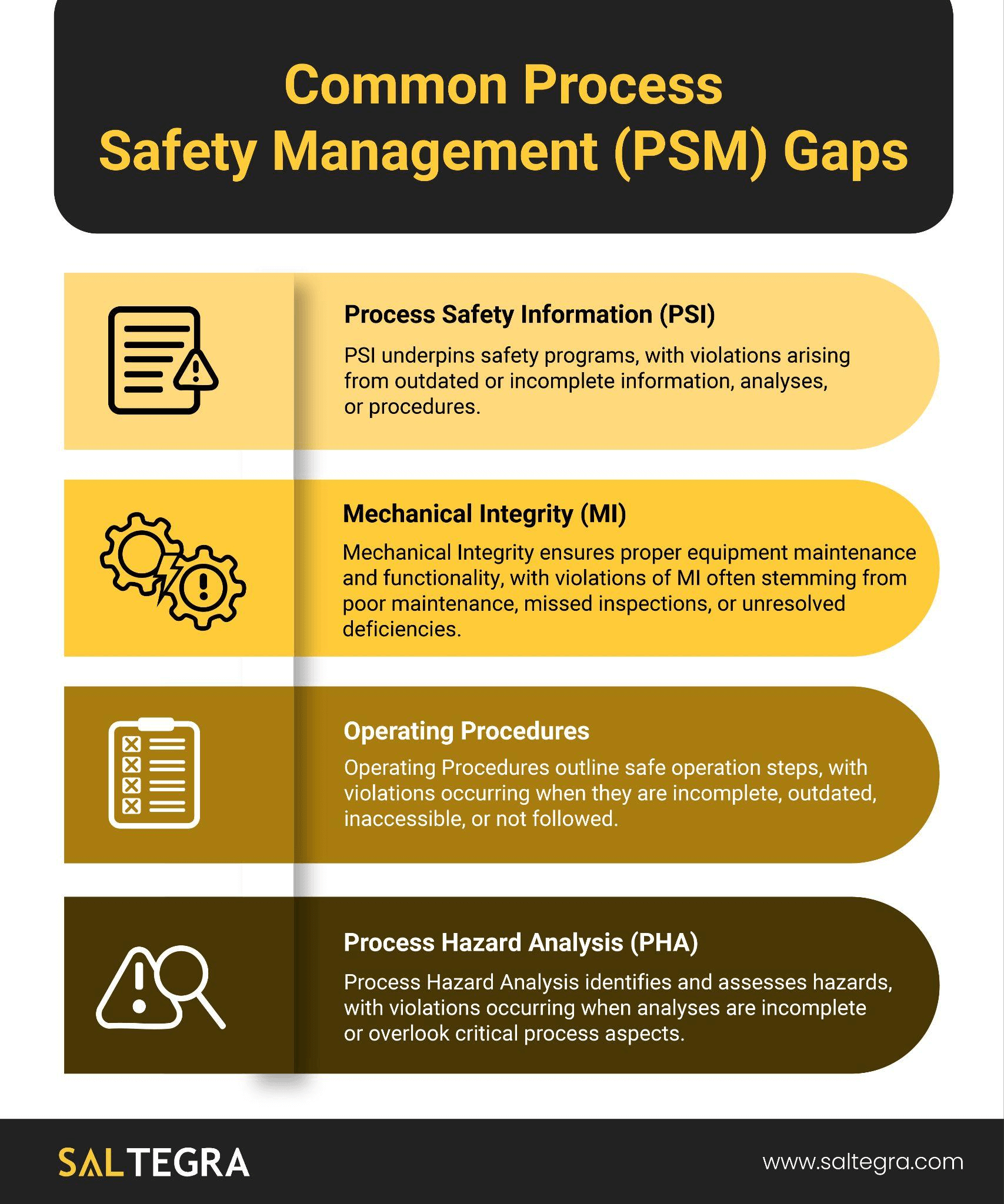
These four elements consistently top the list of violations, with equipment-related information and mechanical integrity deficiencies being particularly notable.
Accuracy of PSM Procedures
PSM procedures are crucial for safe operations in hazardous environments. Inaccurate, outdated, or vague procedures can leave workers unsure of how to respond to hazards, leading to confusion, errors, and unsafe actions, especially in emergencies, increasing the risk of incidents and accidents.
PHA Non-Comprehensive Coverage
Process Hazard Analysis (PHA) is essential for identifying and evaluating potential risks in a process. When a PHA is not comprehensive or misses critical hazards, it leaves the organization vulnerable to undetected risks that could cause catastrophic failures. Gaps in hazard identification or the failure to reassess processes with changes in equipment, technology, or operations can result in unforeseen dangers that compromise employee safety.
Lack of Report and Investigation for Near Misses
Near misses are warning signs that indicate safety weaknesses that could potentially lead to an accident. However, many organizations fail to report or properly investigate near misses. This lack of attention to near misses prevents companies from identifying and addressing underlying issues, missing an opportunity to improve safety and reduce the likelihood of more severe incidents in the future.
Key Human Factors Are Not Addressed
Human factors, including fatigue, communication breakdowns, and poor decision-making, are often overlooked in PSM systems. When these factors are not adequately considered, employees may struggle to follow procedures correctly, misunderstand safety protocols, or fail to identify risks. This lack of attention to human behavior can lead to errors that contribute to accidents, making it essential to incorporate human factors into safety processes to improve overall safety performance.
Process Safety Management Audit Trails Gaps
Audit trails are essential for documenting and tracking PSM activities. Gaps, such as missing or incomplete records, hinder compliance verification and safety measure effectiveness. Without a complete audit trail, it becomes harder to monitor safety practices, identify improvements, or demonstrate compliance, increasing incident and non-compliance risks.
Inconsistent Policy Enforcement
Consistent enforcement of safety policies is critical to ensuring that all employees follow established protocols. Inconsistent enforcement leads to confusion, as employees may disregard safety measures when they see that certain policies are not uniformly applied. This inconsistency undermines the safety culture and increases the likelihood of unsafe behaviors, contributing to a higher risk of accidents and injuries.
Ineffective and Insufficient Employee Training
Employee training is crucial for ensuring that workers understand safety procedures and can respond to hazards effectively. Insufficient or outdated training or lack of hands-on experience can lead to unsafe practices, errors, and non-compliance with safety standards, increasing risks for the organization and its employees.
Why Work With a Third-Party Expert to Evaluate PSM Gaps?
Working with third-party experts for a PSM gap analysis ensures an unbiased and thorough evaluation of an organization’s safety processes. These external consultants bring an objective perspective, helping identify weaknesses that may be overlooked by internal leadership.
Using defined standards, they assess all aspects of the PSM process, ensuring compliance with PSM compliance requirements and regulations such as OSHA, EPA, CalOSHA, and CalEPA. Their expertise also helps identify organizational gaps in resources, readiness, and employee motivation, ultimately leading to tailored solutions that improve safety, efficiency, and continuous improvement.
Saltegra Consulting LLC specializes in conducting comprehensive gap assessments as a third-party provider, ensuring an objective and thorough analysis of your PSM, RMP, and CalARP programs. Our expert consultants will identify potential hazards, operational risks, and gaps in your safety processes, helping you stay compliant with crucial regulations.
By partnering with us, you can implement effective risk mitigation strategies, enhance employee safety, improve operational efficiency, and reduce costs associated with workplace incidents. With Saltegra Consulting LLC, you gain the expertise to optimize safety performance and drive continuous improvement across your organization.
Conclusion
In conclusion, conducting a Process Safety Management (PSM) gap analysis is crucial for identifying weaknesses and ensuring compliance with safety standards. It helps uncover areas for improvement, such as inaccurate procedures, incomplete hazard analysis, and insufficient training, ultimately reducing risks and enhancing safety.
Working with third-party experts provides an objective evaluation and actionable insights, driving continuous improvement and fostering a safer, more efficient workplace. Contact us today to schedule your PSM gap assessment in the USA and take the first step toward a safer, more compliant operation.