
How Does Gap Assessment Help Align Your Risk Management Practices with CalARP
Introduction
In California’s high-risk industries, particularly those handling hazardous chemicals, compliance with safety standards is more than a formality. The California Accidental Release Prevention (CalARP) program requires facilities to take proactive steps to prevent chemical incidents that could threaten workers, communities, and the environment.
To meet these obligations and improve overall safety performance, organizations must regularly assess whether their current practices align with CalARP’s stringent requirements. One of the most effective tools for doing so is the gap assessment.
A gap assessment is a structured process that evaluates the difference between a facility’s existing risk management practices and what is required for full compliance. It helps identify deficiencies or gaps and create a roadmap to address them, ensuring that safety and compliance efforts are comprehensive and effective.
5 Elements of Gap Assessment
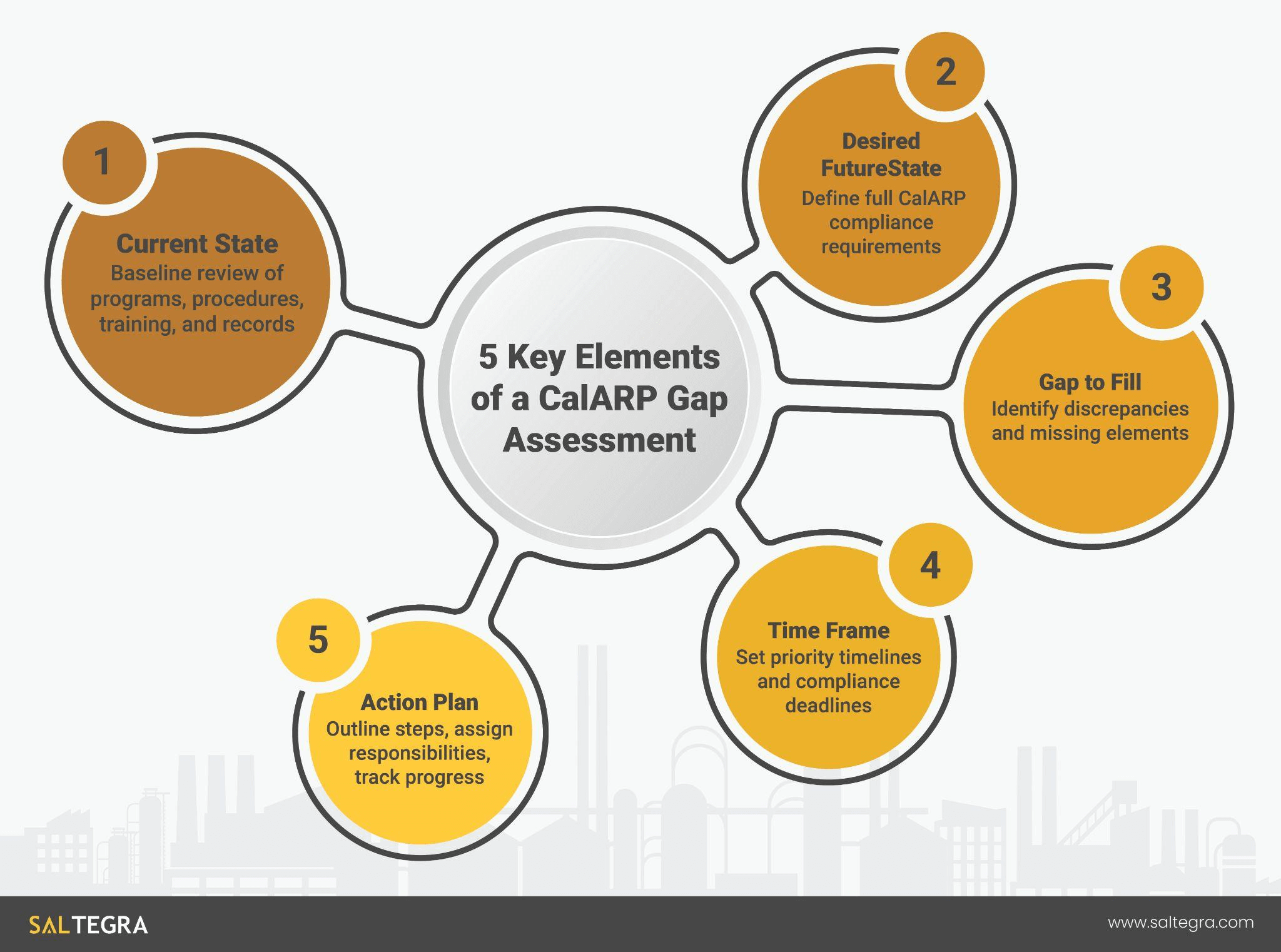
A well-designed California Accidental Release Prevention (CalARP) gap assessment can be visualized through five key elements, each representing a critical phase in evaluating and improving safety programs in the USA. These components ensure that risk management practices are examined systematically and brought into alignment with regulatory expectations.
Current State
This step involves gathering and reviewing existing documentation, procedures, and systems. It provides a baseline of current operations, including safety programs, training, maintenance records, and risk assessments.
Desired Future State
Here, the facility defines what full compliance looks like under CalARP. This includes meeting requirements outlined in the Risk Management Plan (RMP), Process Safety Information (PSI), and Hazard Assessment or PHA.
Gap to Fill
This is the core of the analysis, identifying the specific discrepancies between the current and desired states. Common gaps may include outdated PHAs, incomplete training records, insufficient mechanical integrity programs, or missing documentation.
Time Frame
Each identified gap must be paired with a realistic and prioritized implementation schedule. Establishing a time frame is critical to ensure that corrective actions are tracked, deadlines are met, and regulatory milestones such as revalidation cycles or agency inspections are not missed.
Action Plan
A corrective action plan outlines how to close each gap, who is responsible, and what resources are needed. It includes actionable steps, a timeline, and a strategy for verifying completion to ensure progress toward CalARP alignment.
Benefits of Gap Assessment for Companies
Gap assessments offer far-reaching benefits, particularly for facilities regulated under CalARP. Beyond compliance, they support safety, efficiency, and business continuity.
CalARP Regulatory Readiness
A gap assessment helps companies in the USA ensure their programs comply with California Accidental Release Prevention (CalARP) standards. It minimizes the risk of enforcement actions, fines, or delays during inspections by identifying and correcting issues before regulatory agencies do.
Improved Risk Awareness and Mitigation
By uncovering previously overlooked hazards and vulnerabilities, gap assessments empower organizations to implement stronger controls and reduce the likelihood of chemical releases or safety incidents.
Increased Operational Efficiency
Gap assessments often reveal inefficiencies in documentation, procedures, or resource allocation. Facilities can use this insight to streamline workflows, eliminate redundancies, and improve coordination across departments.
Actionable Insights for Strategic Decision-Making
A well-executed assessment delivers clear, data-driven insight into compliance gaps and safety performance. Leadership can use this information to make smarter decisions about resource investment, process redesign, and safety program enhancements.
Improved Stakeholder Confidence
A proactive approach to compliance sends a strong signal to employees, regulators, the public, and other stakeholders. It demonstrates accountability, fosters trust, and strengthens the company’s reputation for responsible operations.
Areas Assessed in CalARP Gap Analysis
A thorough CalARP gap assessment focuses on key program areas required under the regulation. These are the foundational elements for maintaining safe operations and achieving long-term compliance.
Hazard Assessment
This area evaluates how well the facility identifies and analyzes potential release scenarios, including worst-case and alternative scenarios. It checks for up-to-date hazard modeling and integration with emergency planning.
Regulatory Documentation
The assessment verifies that the facility’s Risk Management Plan (RMP) and required submissions to the California Environmental Reporting System (CERS) are accurate, complete, and reflective of current processes and inventories.
Prevention Program
This includes a comprehensive review of several critical components, such as Process Safety Information (PSI), Hazard Reviews or Process Hazard Analyses (PHA), Operating Procedures, Training Programs, Mechanical Integrity systems, Incident Investigation protocols, Management of Change (MOC), and Compliance Audit processes.
Each of these elements is thoroughly evaluated not only for its functionality but also for the quality and completeness of its documentation, ensuring alignment with CalARP program requirements and best practices.
Emergency Response Plan
The gap analysis checks if the facility’s Emergency Response Plan (ERP) is up to date, coordinated with local responders, tested through drills, and communicated to employees and external stakeholders.
Management Systems
The assessment reviews how roles and responsibilities are defined, how audit and incident findings are tracked, and how continuous improvement is supported through documentation, leadership oversight, and system controls.
How Saltegra Can Make Your Gap Assessment Process More Efficient?
Conducting a gap assessment under CalARP is not just about checking boxes; it is about deeply understanding and improving your facility’s risk profile. That is where Saltegra Consulting comes in. We offer a structured, industry-tested methodology for CalARP gap assessments, built to uncover critical issues and guide efficient compliance.
Our process includes:
- Comprehensive documentation reviews
- On-site or virtual field verification
- Interviews with key personnel
- Development of customized compliance roadmaps
- Tracking tools to monitor the action plan
We provide end-to-end support, from the assessment phase to full implementation of recommendations. Our team includes certified process safety professionals, technical writers, and compliance consultants who understand both CalARP and federal RMP frameworks.
We tailor each engagement to your site’s specific needs, ensuring nothing is overlooked and everything is aligned with both regulatory expectations and your operational realities.
Conclusion
A gap assessment is a powerful and necessary tool for any facility in the USA operating under the California Accidental Release Prevention (CalARP) program. It enables companies to identify and address compliance gaps, reduce risk, and strengthen their overall process safety system.
When done correctly, it leads to better decisions, safer operations, and increased confidence from both the regulators and stakeholders. But to be truly effective, a CalARP gap assessment must be comprehensive, structured, and led by experienced professionals who understand the regulatory landscape.
Saltegra Consulting is your trusted partner in this process. Our support can empower you to efficiently identify what needs improvement and close the gaps with confidence. Contact us today to schedule your CalARP gap assessment and take the next step toward stronger safety, compliance, and operational excellence.