Proactive Safety: The Role of CalARP Compliance Audit in Reducing Risk
Introduction
The California Accidental Release Prevention (CalARP) program stands as a critical regulatory framework designed to minimize the potential for catastrophic releases of hazardous materials in California, USA.
At its core, the California Accidental Release Prevention (CalARP) Compliance Audit is a fundamental oversight mechanism for facilities in the USA, particularly California, handling specified quantities of regulated substances. This systematic evaluation process is not merely a regulatory obligation but a comprehensive safety protocol that significantly reduces operational risks.
Facilities subject to CalARP regulations must undergo compliance audits at a minimum every three years, with these evaluations serving as essential tools for identifying vulnerabilities, enhancing safety protocols, and ensuring regulatory adherence.
The CalARP Compliance Audit evaluates a facility’s adherence to established risk management principles. It identifies areas requiring improvement, ultimately contributing to a safer operational environment and reduced likelihood of accidental releases.
Key Components Reviewed During a CalARP Audit
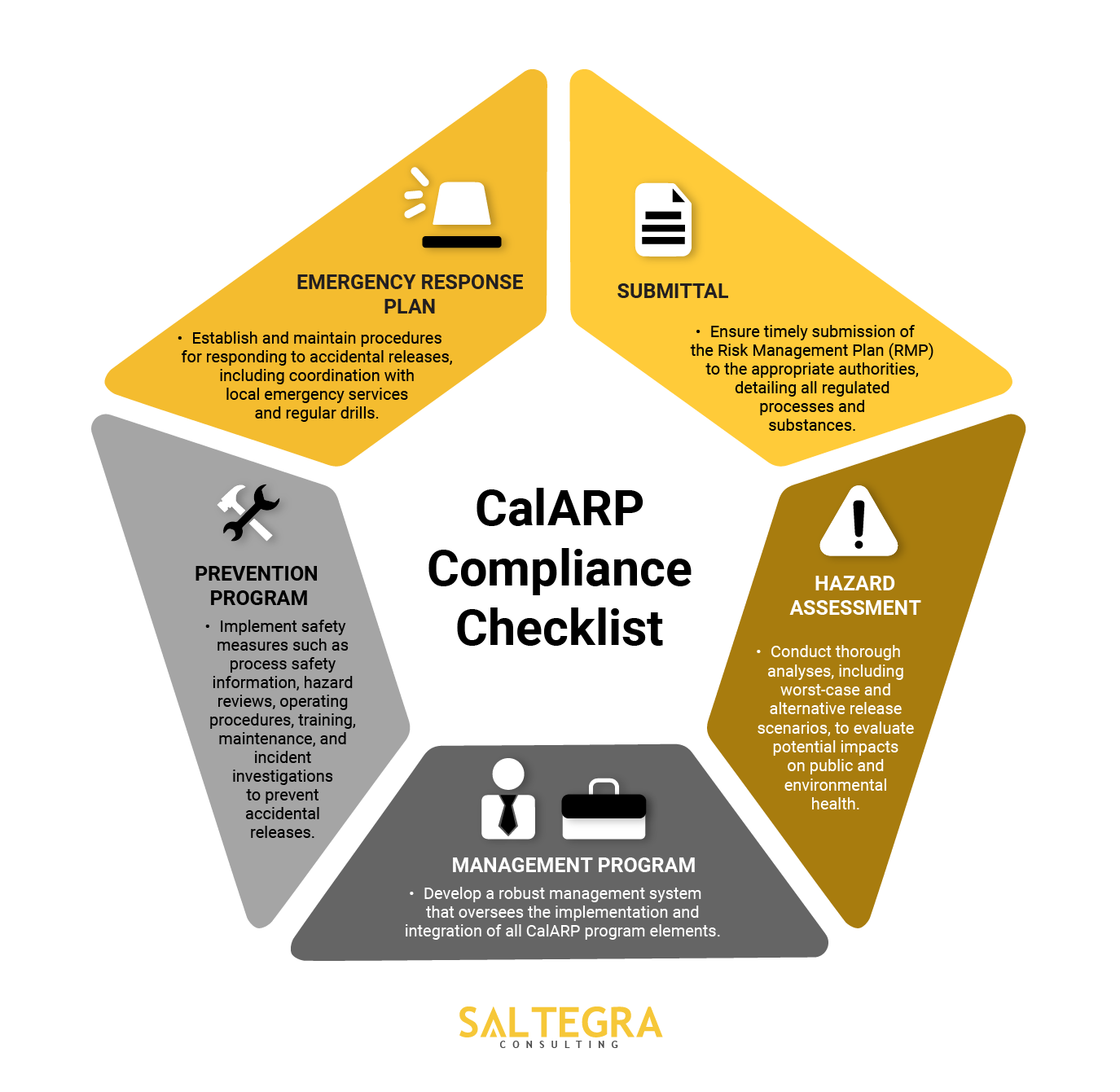
Emergency Response Plans
Emergency response protocols form the cornerstone of facility safety. CalARP audits meticulously examine response plans for completeness, practicality, and implementation readiness.
Auditors evaluate whether emergency procedures address all potential release scenarios, include clear communication protocols, delineate evacuation routes, and establish coordination mechanisms with local emergency responders.
The review assesses whether plans incorporate all regulated substances present at the facility and whether employees receive adequate training on emergency procedures. Response plans must demonstrate integration with local emergency planning committees and, where applicable, align with National Incident Management System (NIMS) protocols.
Hazard Assessments
A thorough inspection of hazard assessment documentation constitutes a critical component of the CalARP Compliance Audit. Auditors examine whether facilities have correctly identified and evaluated potential release scenarios, including worst-case discharges and alternative release scenarios.
The assessment verifies that facilities have utilized appropriate modeling techniques to determine potential off-site consequences of releases, including consideration of meteorological conditions, population density, and environmental receptors. Facilities must demonstrate that hazard assessments have been conducted by qualified personnel and that findings have been integrated into prevention programs.
Safety Policies, Practices, and Procedures
The audit comprehensively evaluates an organization’s safety management system, including written operating procedures, maintenance protocols, and training programs. Auditors assess whether procedures adequately address normal operations, temporary operations, emergency shutdowns, and startup following emergency shutdowns.
The review examines whether procedures include safety and health considerations, operating limits, and consequences of deviation from established protocols. Additionally, the audit verifies documentation of training completion, refresher training schedules, and evaluation of training effectiveness.
Site and Equipment Inspection
Physical inspection of California facilities constitutes a fundamental component of the California Accidental Release Prevention (CalARP) compliance audit process. Auditors thoroughly examine process equipment, safety systems, monitoring devices, and containment structures. The inspection verifies proper implementation of mechanical integrity programs, including scheduled inspections, testing, and preventive maintenance of critical equipment.
Auditors assess compliance with industry standards for equipment design, construction, and installation. The review includes evaluating pressure relief systems, emergency shutdown systems, detection systems, and alarm functionality.
Steps in the CalARP Audit Process
Initial Preparation
The audit process begins with comprehensive preparation, including document gathering and review of previous audit findings. Facilities must compile operational records, maintenance documentation, training materials, and incident reports before the audit commencement.
This stage establishes the scope of the audit and identifies specific areas requiring focused attention. Auditors develop CalARP compliance audit checklists based on regulatory requirements and facility-specific considerations. The preparation phase typically includes a pre-audit meeting to establish expectations and clarify the audit schedule.
Program and Record Reviews
Auditors conduct detailed examinations of the facility’s risk management program, focusing on documentation completeness and program implementation. This review encompasses management systems, standard operating procedures, maintenance records, and training documentation.
Auditors evaluate record-keeping practices for accuracy, completeness, and accessibility. The review verifies that facilities maintain records for the minimum required duration and that documentation adequately demonstrates compliance with CalARP requirements.
 On-Site Inspection
Physical verification of facility conditions constitutes a critical audit component. Auditors thoroughly inspect process areas, storage facilities, control rooms, and safety systems. The inspection confirms that physical conditions align with documentation and that safety measures have been appropriately implemented.
Auditors verify that equipment is properly labeled, that emergency equipment is accessible and operational, and that structural safeguards are maintained. The inspection includes evaluating housekeeping practices and general facility conditions that may impact safety.
Personnel Interviews
Conversations with facility personnel provide valuable insights into the practical implementation of safety programs. Auditors interview operators, maintenance personnel, supervisors, and managers to assess understanding of safety protocols and emergency procedures. These discussions help verify that personnel have received appropriate training, understand their responsibilities, and can demonstrate knowledge of safety systems. The interview process typically includes assessment of management commitment to safety and the effectiveness of communication channels.
Report and Recommendations
Following the audit, a comprehensive report documents findings, identifies compliance issues, and offers recommendations for improvement. The report provides a systematic assessment of compliance status, including both strengths and deficiencies in the facility’s risk management program.
Recommendations address specific corrective actions required to achieve full compliance and enhance safety performance. The report becomes a foundational document for developing improvement plans and tracking progress.
Follow Up
The final stage involves addressing identified deficiencies through targeted corrective actions. Facilities must develop and implement action plans to resolve compliance issues within appropriate timeframes.
This stage includes verification of corrective action implementation and assessment of effectiveness. In some cases, follow-up inspections or focused audits may be conducted by regulators to verify the resolution of significant findings. Documentation of corrective actions becomes part of the facility’s compliance record and informs future audit preparations.
Ensure the Viability of Your Existing Programs With CalARP Auditing Services
Professional auditing services provide specialized expertise in navigating CalARP requirements and optimizing safety programs. Experienced auditors bring a comprehensive understanding of regulatory expectations and industry best practices, enabling facilities to achieve and maintain compliance.
External auditors offer objective assessments of program effectiveness and identify opportunities for improvement that may not be evident to internal evaluators. Professional services can assist in developing corrective action plans, providing training, and implementing program enhancements.
By leveraging specialized auditing expertise, facilities can transform compliance obligations into valuable opportunities for safety improvement.
Conclusion
The California Accidental Release Prevention (CalARP) Compliance Audit in the USA is a fundamental mechanism for ensuring operational safety and regulatory compliance. When properly executed, these audits deliver substantial benefits beyond mere regulatory compliance, including enhanced operational efficiency, reduced incident potential, and improved community relations.
The systematic evaluation by experts like Saltegra Consulting LLC provides valuable insights into program strengths and weaknesses, enabling continuous improvement of safety systems. By approaching CalARP audits as opportunities rather than obligations, facilities can develop more robust safety cultures and an effective risk management plan.
Ultimately, the CalARP Compliance Audit process contributes significantly to the prevention of catastrophic releases and the protection of workers, communities, and the environment throughout California. Contact Saltegra Consulting LLC today and connect with CalARP experts.