When Is the Perfect Time to Use Hazard Identification (HAZID) for Risk Analysis?
Introduction
In industries like oil and gas, chemical manufacturing, and power generation, recognizing hazards early is one of the most innovative ways to reduce risk. There’s no shortage of risk analysis tools available in the USA, from quantitative methods like Fault Tree and Event Tree Analysis to more familiar qualitative approaches like HAZOP or FMEA.
Some of these tools, however, require detailed engineering data that simply isn’t available at the start of a project. That’s where Hazard Identification (HAZID) comes in. HAZID is a risk analysis tool for the early phases, before the P&IDs are finalized and the equipment is installed. It’s a structured but flexible method that helps teams spot potential hazards while there’s still time to design around them or plan effective safeguards.
Understanding HAZID and Its Goals
At its core, HAZID is a structured, qualitative review aimed at identifying hazards across a range of sources, technical, human, and environmental, long before they materialize into incidents. It’s not a deep dive into every possible scenario but more of a big-picture scan. The idea is to uncover possible risks that could shape design, affect permitting, or require further detailed hazard analysis later.
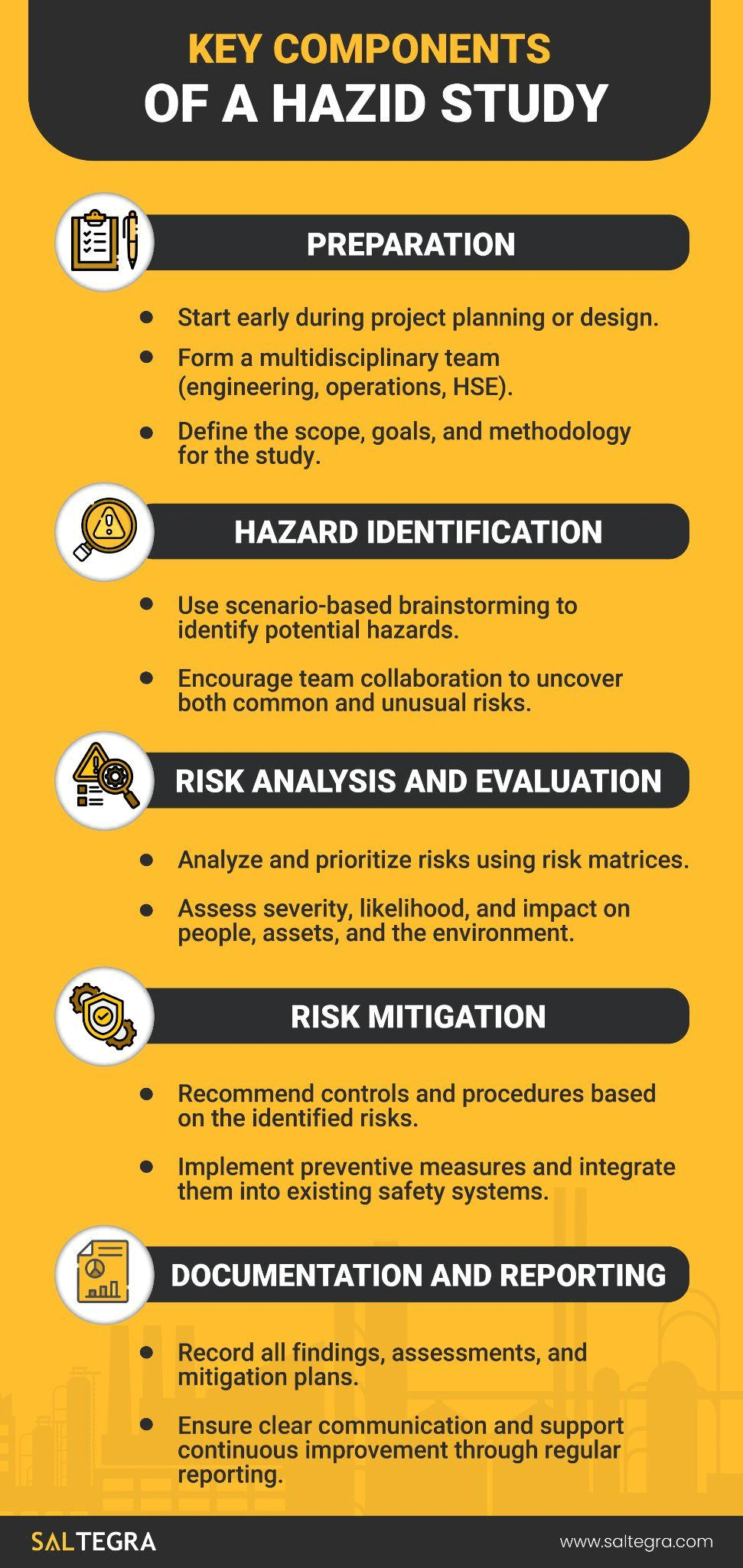
According to the CCPS Guidelines for Hazard Evaluation Procedures, HAZID is especially useful in the early stages of a project or during major changes. It’s not intended to replace tools like HAZOP or LOPA but to come before them. CCPS notes that early hazard identification supports safer decisions by giving project teams a clear sense of where to focus their efforts as designs evolve.
The main goals of HAZID include:
- Identifying hazards before detailed engineering is complete
- Flagging risks to people, property, and the environment
- Highlighting areas that may require HAZOP, LOPA, or further study
- Supporting early decision-making
- Helping teams meet internal standards or regulatory expectations
When done right, HAZID doesn’t give you all the answers, but it points you to the right questions. It acts as a filter that highlights where deeper investigation is needed.
Who Should Perform a HAZID Study?
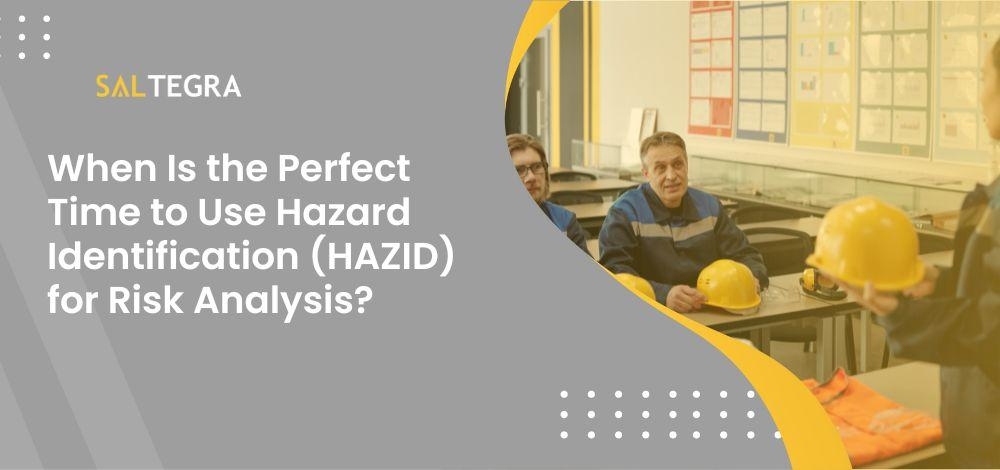
People, not software, drive HAZID. That’s both its strength and a potential weakness if the team isn’t well-chosen. The session should bring together folks with different perspectives in engineering, operations, safety, and maintenance, and must be led by a skilled facilitator.
Key roles typically include:
- Facilitator: Guides the discussion, keeps it focused, and ensures hazards are fully explored—ideally, someone with HAZID training and experience in leading risk reviews.
- Scribe or Recorder: Captures the findings clearly and in real time. Needs to understand the technical language and know how to translate discussion into action items.
- Operations Staff: Offer practical insights on how systems are run, not just how they’re supposed to run.
- Process and Design Engineers: Help explain what’s being built, how it will work, and where things might go wrong.
- Safety and Environmental Professionals: Bring regulatory knowledge and a broader risk management lens.
- Maintenance or Reliability Team: Offer input on equipment performance, failure histories, and known problem areas.
The broader the team, the better the coverage. Every participant adds a layer of understanding that improves the overall outcome.
Scenarios Where HAZID Makes Sense
Not every situation calls for HAZID. But when used in the right context, it’s a powerful tool. Here are a few scenarios where HAZID shines:
- Early Project Development
When you’re still in concept selection or early FEED (Front-End Engineering Design), detailed design data is usually lacking. A HAZID study can flag potential layout risks, material handling issues, or external threats before decisions are locked in. - Major Modifications
Installing new units, updating piping, or adding chemicals to the process? These changes can introduce new hazards or weaken existing protections. HAZID helps catch those shifts early so controls can be built in, not bolted on. - Construction and Commissioning
Temporary tie-ins, contractor work, and pre-startup tasks often fall outside standard procedures. A HAZID done before commissioning helps make sure those one-time activities are reviewed with fresh eyes. - Challenging Locations
Remote or harsh environments like offshore platforms, desert facilities, and earthquake zones bring unique external risks. HAZID provides a way to evaluate these risks alongside process hazards, improving overall preparedness. - New Technologies or Processes
When dealing with novel chemicals, unfamiliar systems, or first-time process configurations, experience may be limited. A HAZID study helps teams explore potential hazards when benchmarks don’t exist. - Projects Involving Multiple Contractors or Partners
Joint ventures or shared projects often mean varying safety cultures. A HAZID session helps align all parties on risks, responsibilities, and expectations, preventing confusion that could lead to incidents. - Screening Before HAZOP or LOPA
Think of HAZID as a triage tool. It helps prioritize where to spend time and resources on more detailed methods. Not every system needs a full HAZOP, but HAZID can help you figure out which ones do.
Need Expert Support for Your Next HAZID Study?
At Saltegra Consulting, our team brings together experienced facilitators, practical insight, and proven methods to guide your hazard identification process. From early planning to full-scale operations, we help you spot risks before they become incidents.
Ready to talk about your next project? Contact us today and take a proactive step toward safety.
Conclusion
HAZID doesn’t give you all the answers, but it helps you ask the right questions at the right time. It’s a practical, people-driven process that helps steer projects toward safer outcomes from the start. Whether you are planning a new plant, making major changes, or exploring unfamiliar ground, Hazard Identification is a smart step toward assessing risks and avoiding preventable problems.
The Center for Chemical Process Safety calls this kind of early-stage risk identification a best practice, and for good reason. When you take the time to ask “What could go wrong?” before the concrete is poured or the valves are installed, you’re already ahead of the game.