IEC 61511 vs ISA 84: What’s the Difference and Which One Should You Follow?
Introduction
In chemical processing facilities, functional safety ensures that automated systems respond effectively to dangerous deviations. Safety Instrumented Systems (SIS) are essential safeguards that prevent loss of containment, fires, and catastrophic events. Selecting the appropriate standards to govern these systems is a key part of any process safety strategy.
Two widely recognized standards for Safety Instrumented Systems (SIS) are IEC 61511 and ISA 84. While these frameworks are closely related, they are not identical. Understanding their differences is essential for companies that need to maintain compliance, reduce risk, and ensure consistency across their operations.
Understanding Safety Instrumented Systems (SIS) and Safety Instrumented Functions (SIF)
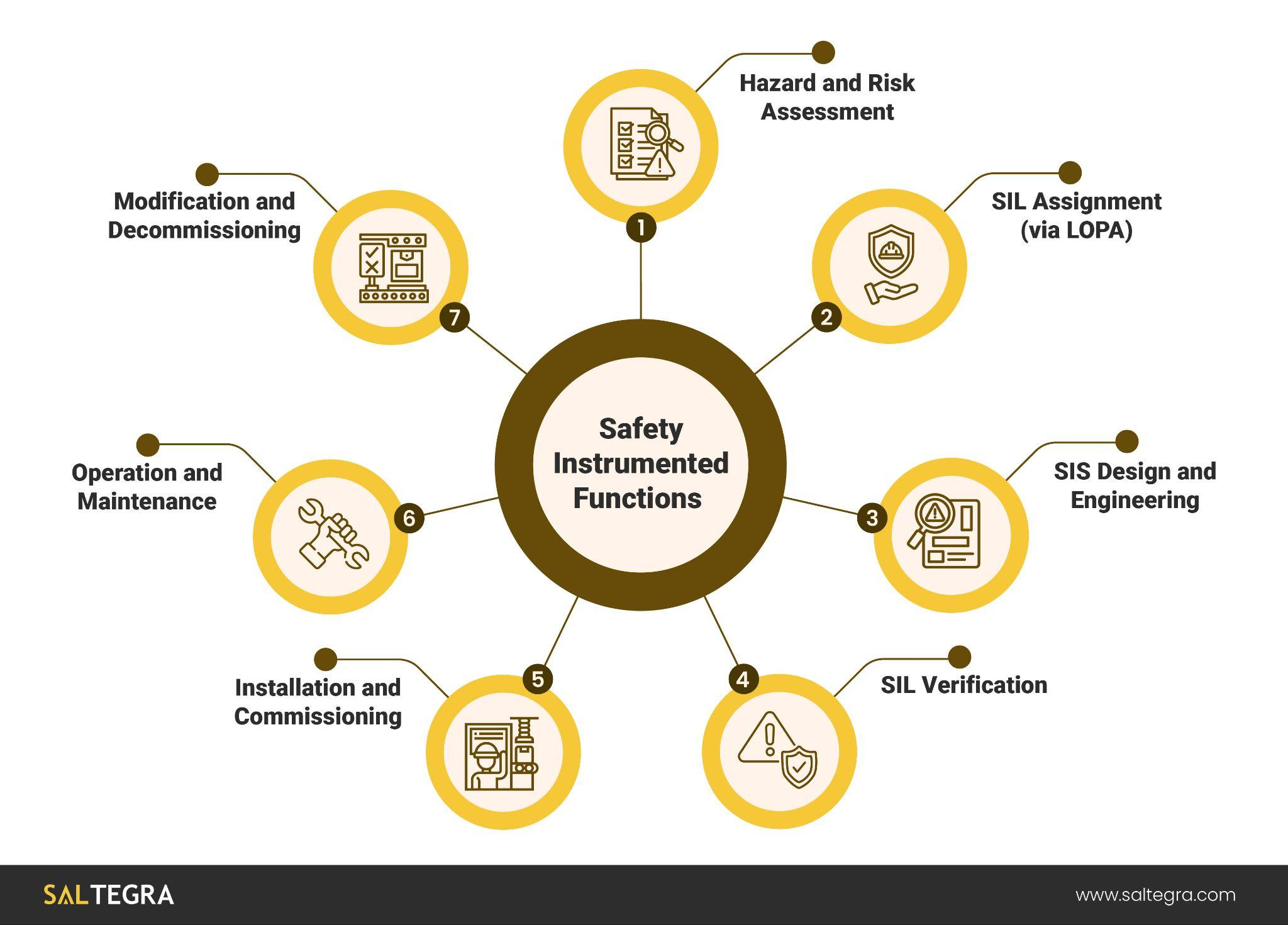
A Safety Instrumented System (SIS) is a dedicated system that detects hazardous conditions and responds automatically to bring the process to a safe state. Each SIS includes one or more Safety Instrumented Functions (SIFs)—automated sequences involving sensors, logic solvers, and final control elements that work together to prevent accidents. These functions are assigned Safety Integrity Levels (SILs) based on the level of risk they must mitigate.
IEC 61511: Global Framework for Functional Safety
IEC 61511, titled Functional Safety – Safety Instrumented Systems for the Process Industry Sector, was developed by the International Electrotechnical Commission (IEC). It addresses the design, installation, operation, and maintenance of SIS in industries like oil, gas, chemicals, and water treatment.
Key features of IEC 61511 include:
- Lifecycle Management: The standard promotes a full safety lifecycle, ensuring that risk reduction strategies are carried through from design to decommissioning.
- Quantitative SIL Determination: Methods such as Layer of Protection Analysis (LOPA) are used to assign SILs, followed by Safety Integrity Level (SIL) Verification to confirm that each SIF meets the required Probability of Failure on Demand (PFDavg).
- Functional Safety Management: Companies must establish clear procedures, define roles, and perform audits as part of a compliant functional safety IEC strategy.
- Integration with IEC 61508: IEC 61511 applies the broader principles of IEC 61508 specifically to the process industries.
ISA 84: U.S. National Standard
ISA 84, also known as ANSI/ISA-84.00.01, is the U.S. national standard for SIS. First published in 1996 and revised in 2004, ISA 84 now aligns closely with IEC 61511. This updated version is referred to as ISA 84.00.01-2004 (IEC 61511 MOD).
Highlights of ISA 84 include:
- Alignment with IEC 61511: The standard mirrors IEC 61511 with slight modifications and includes a “grandfather clause” allowing existing SIS to remain in service if they are documented and maintained.
- U.S. Regulatory Recognition: The Occupational Safety and Health Administration (OSHA) recognizes ISA 84 as a recognized and generally accepted good engineering practice (RAGAGEP) under the Process Safety Management (PSM) standard.
- Terminology and Format Differences: Though terminology differs slightly, both standards cover the same concepts, such as SIFs, SILs, and safety lifecycle stages.
Practical Differences: Side-by-Side Comparison
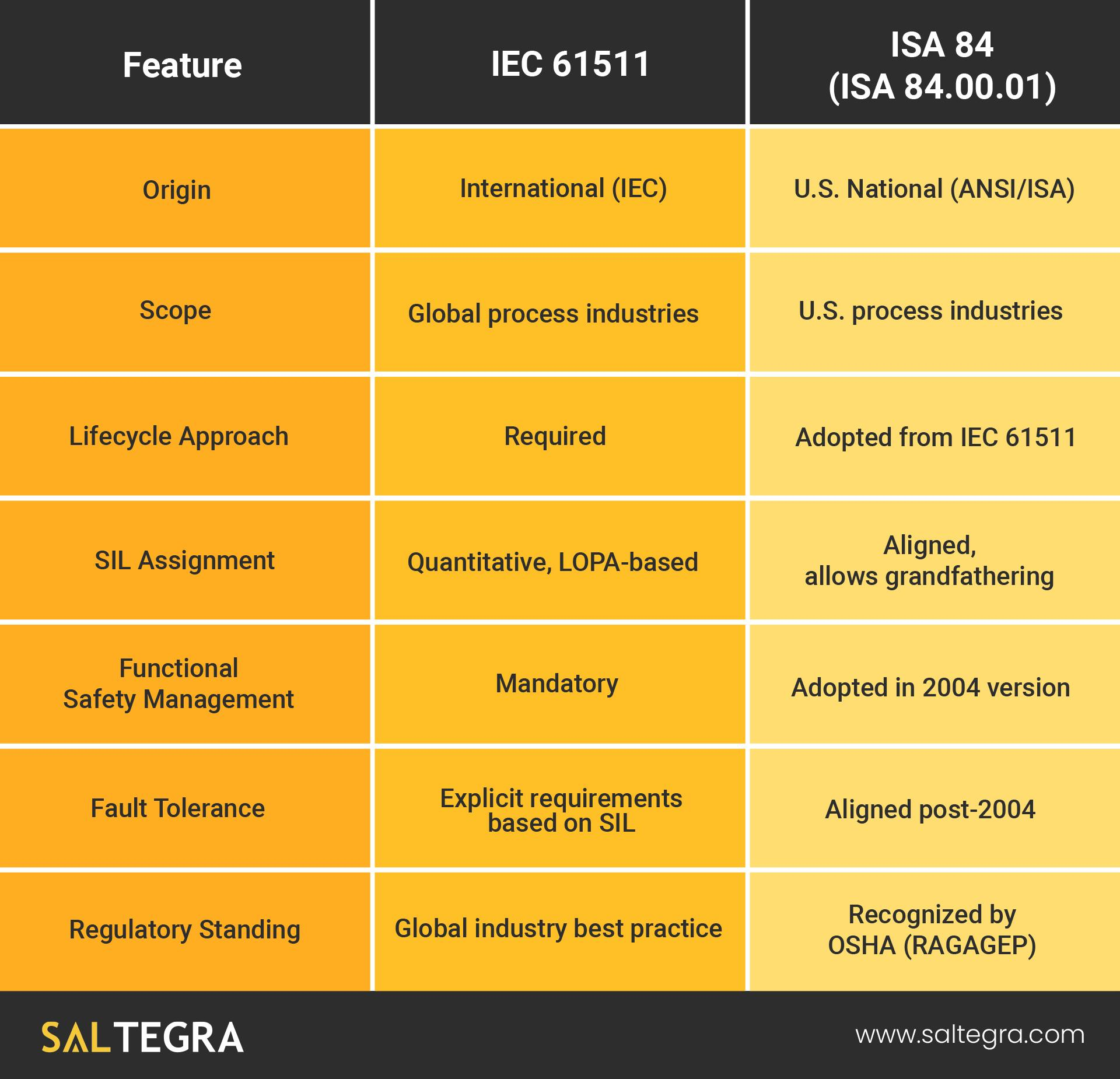
Four Key Distinctions
- Functional Safety Management
IEC 61511 requires a formal management system for functional safety, including competency, training, and documentation. This requirement was added to ISA 84 in the 2004 revision. - SIL Verification and Fault Tolerance
IEC 61511 mandates SIL Verification using quantitative methods and requires fault tolerance based on the target SIL. Early versions of ISA 84 allowed more flexibility, but the 2004 update aligned it with IEC 61511. - Regulatory Context
In the U.S., ISA 84 is a national standard and cited by OSHA. IEC 61511 is recognized internationally and often forms the baseline for companies operating across borders. - Legacy Systems
ISA 84’s grandfather clause allows the continued use of older SIS systems if they are documented and properly maintained. IEC 61511 applies only to new and modified systems.
Which Standard Should You Follow?
For companies operating in the United States, follow ISA 84.00.01 (IEC 61511 MOD) to ensure compliance with OSHA expectations. Legacy SIS may be used under the grandfather clause if properly documented.
For operations outside the U.S., or for multinational firms, IEC 61511 is the appropriate standard. It is globally recognized and serves as a consistent reference across jurisdictions.
Conclusion
Both IEC 61511 and ISA 84 provide structured, lifecycle-based management for Safety Instrumented Systems (SIS) and require rigorous application of Safety Integrity Level (SIL) Verification. The primary difference lies in regional enforcement and terminology, not technical philosophy. What matters is the consistent and competent application of the standard.
Organizations must implement a clear risk management plan, apply functional safety IEC practices, and ensure reliability across the SIS lifecycle.
Saltegra Consulting supports companies working under both standards by offering facilitation of LOPA sessions, SIL verification, and end-to-end SIS lifecycle consulting. Whether operating locally or globally, Saltegra helps organizations meet compliance goals and enhance process safety integrity. Contact us today!