
New EPA Rules Affect the Process of Conducting STAA Studies?
Introduction
On March 11, 2024, the U.S. Environmental Protection Agency (EPA) finalized significant amendments to its Risk Management Program (RMP) regulations under the Clean Air Act. These revisions, effective May 10, 2024, emphasize a proactive approach to chemical accident prevention, notably through the mandatory implementation of Safer Technology and Alternatives Analysis (STAA) for certain high-risk facilities.
STAA, rooted in the principles of Inherently Safer Design (ISD), shifts the focus from traditional hazard control methods to the elimination or significant reduction of hazards at their source. This article examines the changes introduced by the new EPA rules, their impact on conducting STAA studies, and strategies for industries to navigate these requirements effectively.
Understanding the Changes in the EPA RMP Rule and Their Impact on STAA
The revised RMP guidelines require facilities in specific sectors—particularly those classified under NAICS codes 324 (petroleum and coal products manufacturing) and 325 (chemical manufacturing)—to conduct a comprehensive STAA as part of their Process Hazard Analysis (PHA).
Key requirements include:
- Conducting a formal STAA to evaluate safer alternatives that can reduce or eliminate hazards.
- Assessing the practicability of implementing identified inherently safer technologies or designs.
- Documenting decisions and providing justifications for not adopting certain safer alternatives.
- Implementing at least one inherently safer technology or design, passive measure, or a combination of active and procedural measures that achieve equivalent risk reduction, especially for facilities meeting specific criteria (e.g., recent RMP-reportable incidents, proximity to other facilities, or use of hydrofluoric acid in alkylation processes).
These provisions underscore the EPA’s commitment to advancing process safety by encouraging facilities to prioritize hazard elimination over mitigation.
Enhanced Criteria for Performing STAA
The updated regulations stipulate a more rigorous approach to STAA, requiring facilities to:
- Evaluate alternatives using a hierarchy of controls: inherently safer technologies or designs, passive measures, active measures, and procedural measures.
- Consider feasibility not solely based on cost but also technical and safety considerations.
- Integrate findings into the PHA and ensure that the STAA is conducted by a team with expertise in the process being evaluated.
This structured methodology aligns with the Center for Chemical Process Safety (CCPS) guidelines, which advocate for a systematic evaluation of safer alternatives throughout the process lifecycle.
Emphasis on Risk Prevention
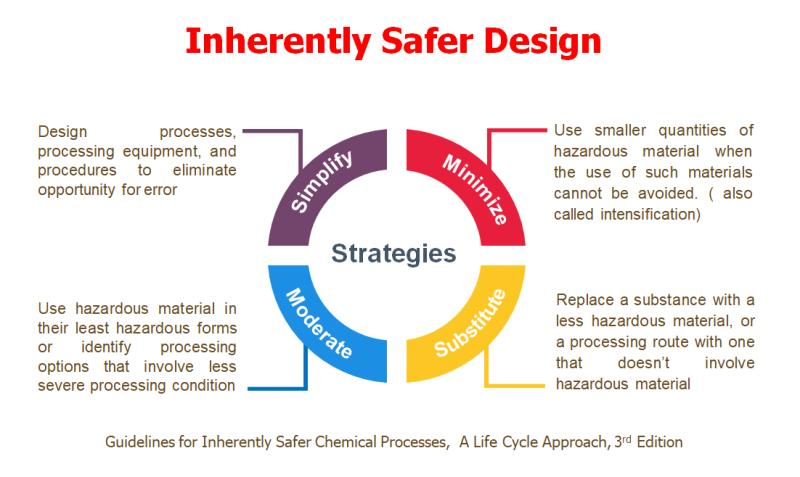
The core philosophy of STAA is the proactive elimination or significant reduction of hazards, rather than relying on add-on controls. The four fundamental principles of Inherently Safer Design, as outlined by CCPS, are:
- Minimization: Reducing the quantity of hazardous substances.
- Substitution: Replacing hazardous materials with less hazardous ones.
- Moderation: Using less hazardous conditions (e.g., lower pressures or temperatures).
- Simplification: Designing processes to be less complex, thereby reducing the likelihood of errors.
By incorporating these principles, facilities can achieve more robust and sustainable safety outcomes.
Broader Scope of Facilities
While the Safer Technology and Alternatives Analysis (STAA) requirement specifically targets facilities in NAICS codes 324 and 325, the EPA’s amendments also introduce considerations for:
- Facilities with recent RMP-reportable incidents.
- Facilities located within one mile of another covered facility.
- Facilities utilizing hydrofluoric acid in alkylation processes.
These criteria expand the applicability of STAA, ensuring that a broader range of high-risk facilities engage in proactive hazard analysis and mitigation.
Implementation of Inherently Safer Design (ISD) or Inherently Safer Technology (IST)
Implementing ISD or IST involves:
- Identifying opportunities to apply ISD principles during the design or modification of processes.
- Evaluating the practicability of implementing these alternatives, considering technical feasibility and safety benefits.
- Documenting decisions and providing justifications for not adopting certain alternatives, ensuring transparency and accountability.
Facilities are encouraged to integrate ISD considerations early in the design phase to maximize safety benefits and cost-effectiveness.
Navigating the Changes and Ensuring Compliance
To adapt to the new requirements, industries should:
- Integrate STAA into existing PHA processes, ensuring a seamless approach to hazard analysis.
- Train multidisciplinary teams on ISD principles and STAA methodologies.
- Develop standardized templates for documenting STAA evaluations and decisions.
- Engage with regulatory bodies to stay informed about compliance expectations and best practices.
By proactively adopting these strategies, facilities can improve their safety performance and enhance regulatory compliance.
Conclusion
The EPA’s revised RMP rule marks a significant shift towards proactive hazard prevention in the chemical industry. By mandating comprehensive Safer Technology and Alternatives Analysis (STAA) evaluations and emphasizing inherently safer design principles, the regulations aim to reduce the frequency and severity of chemical accidents.
Facilities that embrace these changes by integrating STAA into their safety management systems, training personnel, and documenting decisions will not only achieve compliance but also foster a culture of continuous improvement and risk reduction.
At Saltegra Consulting, we are committed to supporting industries in navigating these regulatory changes, offering expertise in STAA facilitation, ISD implementation, and process safety management. Contact us today and let us guide you in your STAA studies.