

Emergency Response Program for Accidental Releases: A Quick and Easy Guide
Introduction
Accidental chemical releases can have devastating consequences for people, businesses, and the environment. A well-structured Emergency Response Program (ERP) is essential for companies handling hazardous substances. This program ensures that all personnel are prepared to manage an accidental release promptly and effectively.
In California, businesses that handle regulated substances in certain quantities must comply with the California Accidental Release Prevention (CalARP) Program. This program requires businesses to have a solid ERP as part of their Risk Management Plan (RMP).
Key Components of an Emergency Response Program
A thorough ERP is a regulatory requirement and crucial for protecting people, businesses, and the environment. The following sections outline the critical components of a successful ERP that comply with the CalARP regulations program.
Emergency Response Plan
An Emergency Response Plan details the procedures to follow when an accidental release occurs. Critical aspects of the plan include:
- Notification Procedures: Define how to contact local emergency services, including the fire department, local health departments, and other relevant authorities. If the release is significant, the National Response Center (NRC) must also be notified.
- Evacuation Routes and Procedures: Develop well-defined evacuation plans that ensure the safe and orderly exit of employees and visitors. Mark all evacuation routes clearly and ensure that emergency exits are easily accessible.
- Containment Procedures: Outline strategies for containing and controlling the hazardous release. This could involve shutting off valves, using chemical containment systems, or sealing affected areas to prevent further contamination.
A reliable emergency response plan allows your facility to act swiftly, ensuring the safety of workers and reducing the potential for further damage during a chemical incident.
Emergency Response Equipment Procedures
Your ERP should also include detailed procedures for maintaining and using emergency response equipment. This includes:
- Personal Protective Equipment (PPE): Ensure employees have access to and are trained in using the appropriate PPE, including gloves, masks, respirators, and chemical-resistant clothing.
- Spill Response Kits: Keep spill kits readily available near areas where hazardous materials are handled. These kits should contain absorbent materials, neutralizers, and tools necessary to contain and clean up small spills.
- Emergency Decontamination Stations: Install emergency showers and eyewash stations in high-risk areas. These stations provide immediate assistance to employees who may be exposed to hazardous chemicals and must be checked regularly for functionality.
By ensuring that emergency response equipment is adequately maintained and readily accessible, you can minimize the potential for harm in the event of an accidental release.
Employee Training
Comprehensive employee training is one of the most important elements of an ERP. All employees, particularly those working with hazardous substances, must be trained in emergency procedures and use response equipment effectively. Training should cover:
- Response to Chemical Releases: Train employees on how to respond to different chemical releases, including when to evacuate, how to contain the spill, and how to use emergency equipment.
- Use of PPE: Provide training on correctly using personal protective equipment to avoid exposure to harmful substances.
- Communication Protocols: Establish clear protocols for reporting an emergency and contacting appropriate emergency responders.
Regular, hands-on training ensures that employees are prepared to act quickly and effectively during an emergency, minimizing the risk of injuries and chemical exposure.
Regular Reviews and Updates
Your Emergency Response Program (ERP) should evolve with changing circumstances. To remain effective, it must be reviewed and updated regularly. This includes:
- Conducting Drills: Regular emergency drills help test the effectiveness of your plan and ensure that all employees understand their roles during an incident.
- Updating the ERP: Any significant changes in your facility’s operations or the types of chemicals handled should prompt updates to your ERP. New hazards may emerge, requiring changes in emergency response procedures or equipment.
- Equipment Maintenance: Emergency response equipment, such as spill kits and decontamination stations, should be inspected regularly to ensure good working conditions.
Reviewing and updating your ERP helps ensure that your facility is always prepared for emergencies, meets operational needs, and meets regulatory compliance.
Creating an Emergency Response Program
Developing an ERP requires careful planning and coordination across different departments. Here’s a step-by-step guide to creating an effective program.
Form an Emergency Response Program Team
The first step is to establish a dedicated Emergency Response Program team. This team will develop the ERP, ensure compliance with CalARP regulations, and conduct regular reviews. Key team members should include safety officers, operations managers, and representatives from each department that handles hazardous substances.
Assess the Hazards in Your Workplace
Next, perform a comprehensive hazard assessment to identify potential risks associated with the hazardous substances present at your facility. Consider factors such as:
- Chemical Inventory: Identify the regulated substances your facility stores and handles and verify whether these chemicals exceed the thresholds established by CalARP regulations.
- Location of Hazardous Substances: Assess the areas where hazardous substances are used or stored and determine potential points of failure, such as leaky valves or storage tanks.
- Worst-case scenarios: Develop response plans for large-scale chemical releases or fires.
This hazard assessment will provide the information you need to develop a targeted and effective emergency response strategy.
Tailor Your Program to Your Workplace Hazards
Every workplace has unique risks, so your ERP should be tailored to the specific hazards present at your facility. Ensure that your plan addresses the types of chemicals used and the layout of your facility. For instance, facilities handling flammable chemicals should focus on fire prevention and response, while those dealing with corrosive substances should prioritize decontamination protocols.
Integrate Your New Program Into Your Current One
If your facility has an emergency response plan, ensure your new ERP is integrated seamlessly into existing safety protocols. The CalARP regulations program requires a coordinated approach that includes general emergency plans and those specific to chemical releases. Make sure that your ERP works in tandem with fire safety plans, evacuation procedures, and hazardous waste management strategies.
Coordinate With Local Emergency Groups
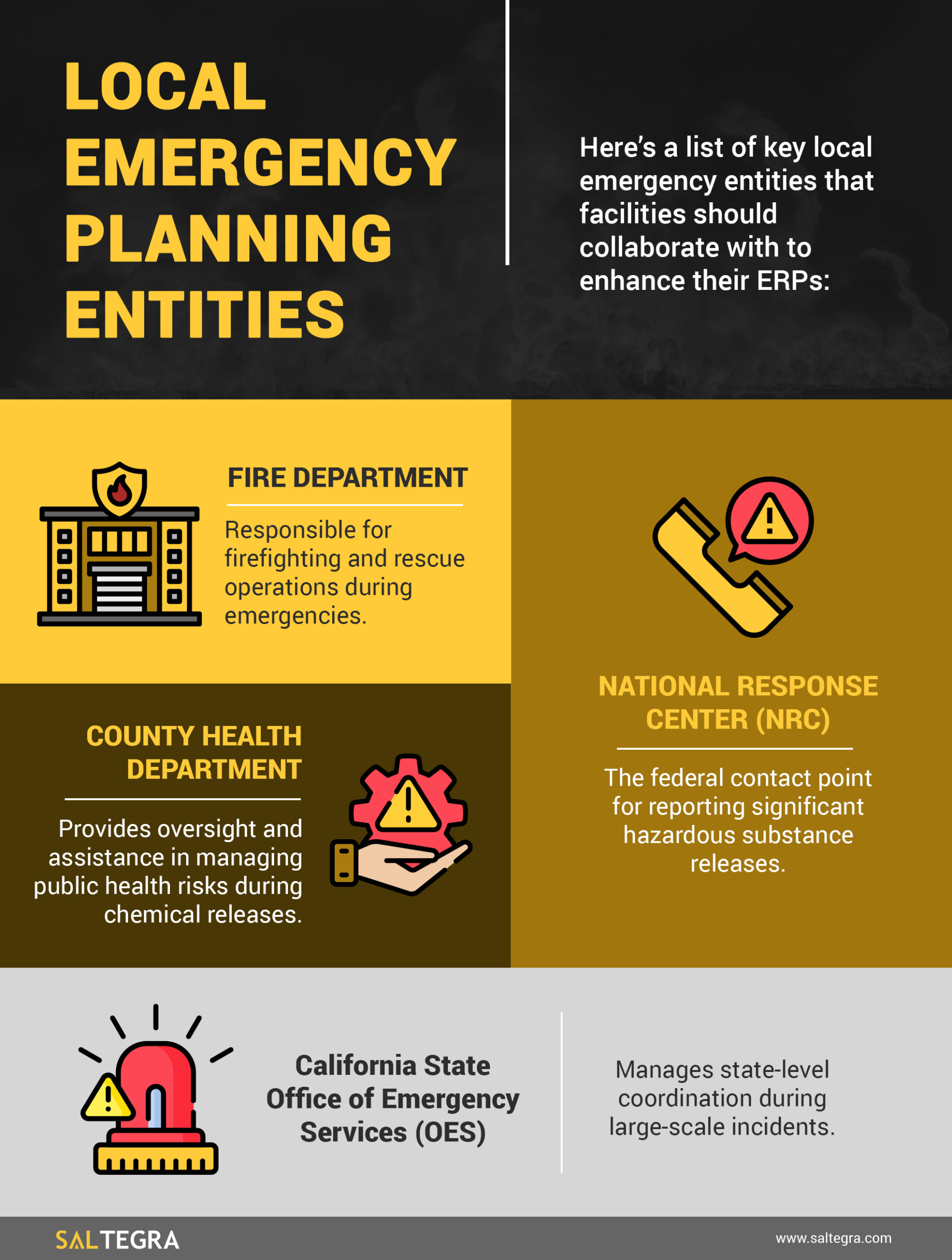
It is essential to coordinate your ERP with local emergency services. Establishing relationships with these entities ensures that your facility receives timely assistance in case of an emergency. Key organizations to coordinate with include:
- Fire Departments: Provide your local fire department with information about the hazardous substances stored at your facility and ensure they are familiar with your ERP.
- County Health Departments: Partner with local health departments to manage public health risks during an accidental release.
- National Response Center (NRC): Ensure your ERP includes protocols for notifying the NRC if an accidental release exceeds federal thresholds.
- California State Office of Emergency Services (OES): The OES works with emergency responders to ensure compliance with state-level emergency protocols.
Coordinating with these groups will enhance the effectiveness of your ERP and ensure compliance with the CalARP risk management plan.
Seek Assistance From Experts
For facilities unfamiliar with the CalARP regulations program or those looking to strengthen their ERP, seeking advice from process safety experts can be invaluable. Experts can help:
- Assess specific facility risks.
- Ensure regulatory compliance.
- Conduct realistic drills and emergency scenarios.
- Provide comprehensive training for employees.
Partnering with professionals ensures your ERP is robust, effective, and compliant with CalARP regulations.
Conclusion
Developing an effective Emergency Response Program is critical for any facility subject to the CalARP Program. A well-crafted ERP can prevent chemical accidents from escalating, protect your employees and community, and ensure regulatory compliance. Businesses can mitigate the risks of accidental chemical releases by focusing on employee training, equipment maintenance, and coordination with local emergency groups.
Investing in a robust ERP allows your facility to remain prepared for emergencies and safeguard people, businesses, and the environment.