

How To Handle Hazardous Waste: A Guide for Chemical Processing Companies
Introduction
In chemical processing industries, hazardous waste management is essential to maintaining a safe environment, preventing accidents, and complying with regulatory requirements. The California Accidental Release Prevention (CalARP) Program emphasizes the importance of properly handling hazardous materials to avoid accidental releases that could harm public health and the environment.
This guide by Saltegra Consulting LLC will walk you through the different types of hazardous waste, their characteristics, and the best practices for handling them in chemical processing companies.
Hazardous Waste: An Overview
Hazardous wastes are materials that pose a threat to public health or the environment due to their chemical composition or properties. In the chemical processing industry, dealing with hazardous waste is routine, making proper disposal and containment crucial to avoid accidents and ensure compliance with laws like the Resource Conservation and Recovery Act (RCRA) and CalARP.
California Accidental Release Prevention Program solutions aim to prevent accidental releases by requiring facilities to implement solid risk management plans. Effective handling of hazardous waste is key to these plans, as improper management can lead to severe incidents.
Types of Hazardous Waste
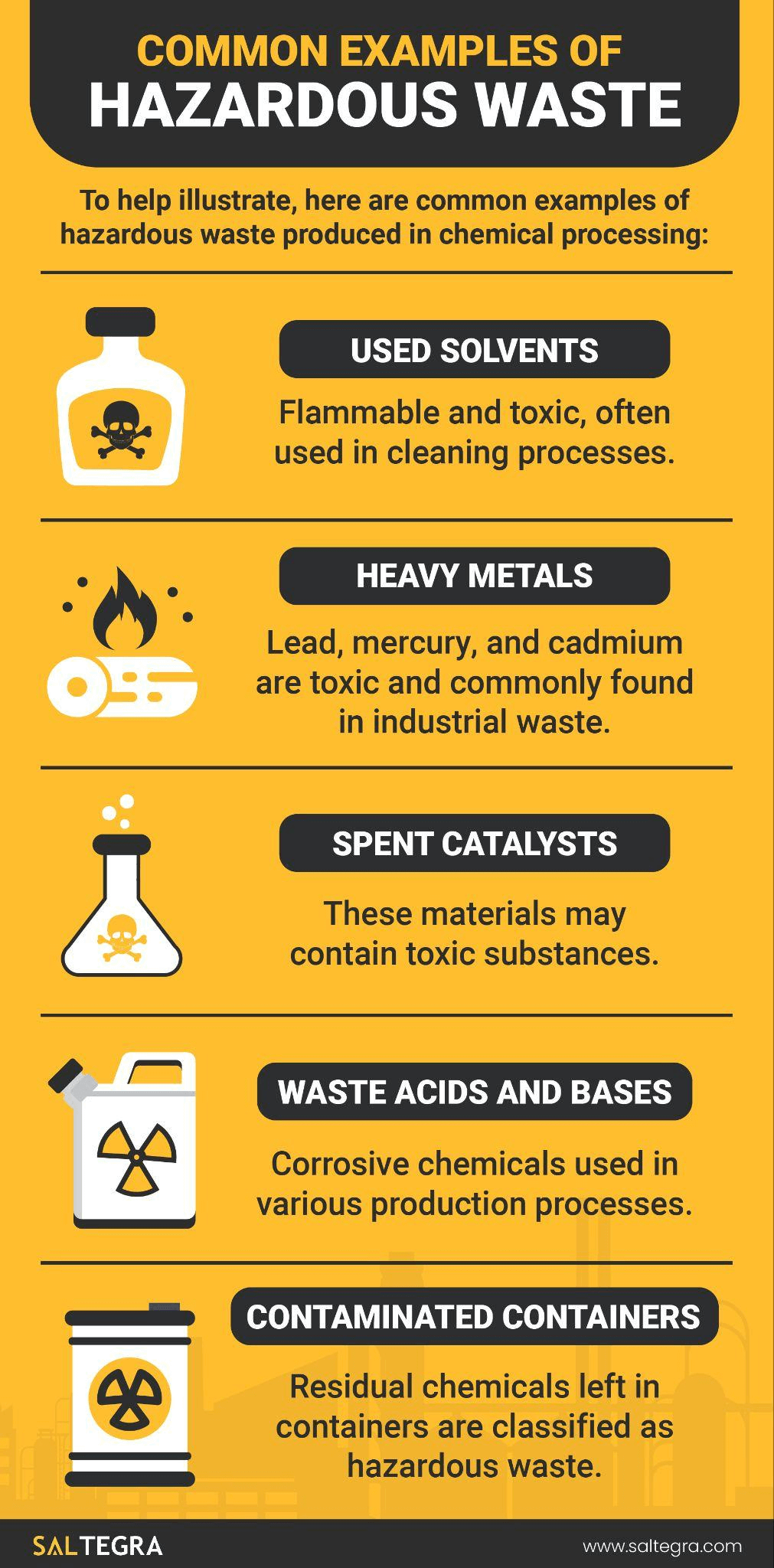
Hazardous waste materials generated by chemical processing companies generally fall into four main categories:
- Ignitable Waste: These materials can catch fire under certain conditions. Common examples include solvents and alcohol-based substances.
- Corrosive Waste: Includes acids or bases that can corrode metal containers or human skin. Sulfuric acid and sodium hydroxide are typical examples.
- Reactive Waste: Highly unstable materials that may react violently when exposed to heat, water, or other chemicals. Examples include peroxides and explosives.
- Toxic Waste: Materials that are harmful or fatal when absorbed by living organisms. Examples include lead, mercury, and pesticides.
Characteristics of Hazardous Waste
Hazardous waste exhibits specific characteristics that define how it should be handled:
- Toxicity: Toxic substances can cause harm to humans, animals, and plants. Companies should handle these materials with extreme care to prevent exposure.
- Reactivity: Reactive waste may explode or release toxic fumes if improperly handled, especially when mixed with other substances.
- Corrosivity: Corrosive materials can erode metals and damage skin, making appropriate storage and handling necessary.
- Ignitability: Flammable materials can cause fires, making it essential to store them in non-combustible containers.
Understanding these characteristics allows companies to implement safer handling practices and create risk management plans that address each hazard.
Tips for Handling Hazardous Waste
Proper hazardous waste management involves more than just disposal. It also covers safe storage, secure containment, protecting employees, and conducting regular inspections.
Practice Proper Waste Storage, Containment, and Disposal
Hazardous substances should be stored in appropriate, clearly labeled containers resistant to the chemicals they hold. For example:
- Containment systems: Ensure storage areas have secondary containment systems to catch spills. This includes spill pallets, containment berms, or lined storage areas.
- Waste segregation: Store incompatible wastes, such as oxidizers and flammables, separately to prevent dangerous chemical reactions.
- Waste disposal protocols: When disposing of hazardous waste, follow local, state, and federal regulations. Most chemical processing companies work with certified hazardous waste disposal contractors to ensure compliance.
Ensuring the proper storage and segregation of hazardous materials minimizes the risk of accidental releases and exposure.
Conduct Regular Inspections
Routine inspections of hazardous waste storage areas are crucial for preventing accidents. Regularly check for:
- Container integrity: Look for signs of leaks, corrosion, or wear.
- Accurate labeling: Ensure all hazardous waste is labeled correctly, including the waste type and storage date.
- Storage area maintenance: Check that containment systems are intact and that waste is stored away from areas prone to weather or physical damage.
Frequent inspections allow you to catch problems before they escalate into serious issues, ensuring that your waste management practices meet regulatory standards.
Assess the Risk of Hazardous Waste in the Workplace
A detailed risk assessment helps identify which hazardous waste poses the greatest risk in the workplace. Chemical processing companies should:
- Identify potential waste streams: Determine where hazardous waste is generated and how it is stored.
- Evaluate risks: Assess the potential for accidental releases, explosions, or exposure incidents.
- Establish a mitigation plan: Ensure safety controls, such as secondary containment, spill response equipment, and trained personnel, are in place to mitigate risks.
California Accidental Release Prevention Program solutions and other regulatory programs require companies to regularly assess these risks and implement corrective actions where necessary.
Give Employees Proper Training
Training is a vital component of hazardous waste management. Employees who handle, store, or transport hazardous materials must be trained in:
- Waste identification and handling: Knowing how to safely identify and handle hazardous waste is key to preventing exposure.
- Emergency response: Employees should be trained to respond to spills, leaks, or accidental releases, including how to use spill kits, activate containment systems, and contact emergency responders.
Training must be updated regularly to account for changes in materials or processes and should comply with OSHA’s Hazardous Waste Operations and Emergency Response (HAZWOPER) standards.
Always Use Personal Protective Equipment (PPE)
Personal Protective Equipment (PPE) protects workers from hazardous waste. Depending on the type of waste, employees should wear:
- Gloves and protective clothing: To protect against corrosive or toxic substances.
- Goggles or face shields: To prevent exposure to chemicals that may cause eye or face injuries.
- Respirators: For working in areas with toxic fumes or dust particles.
Ensuring that workers always wear the appropriate PPE minimizes their risk of exposure and reduces the likelihood of injury.
Report Accidental Releases and Other Safety Concerns
Even with preventative measures in place, accidents can happen. If an accidental release occurs:
- Report immediately: As CalARP requires, companies must report any significant releases of hazardous substances to the appropriate authorities.
- Contain the spill: Activate containment systems to prevent the spread of hazardous waste.
- Investigate: After the incident, investigate the cause and take corrective actions to prevent future occurrences.
Timely reporting and response are crucial to minimizing the impact of a release on the environment and the community.
Conclusion
Chemical processing companies have a critical responsibility for handling hazardous waste. Companies can reduce the risks associated with hazardous waste by following best practices such as proper storage, regular inspections, thorough employee training, and appropriate PPE.
The California Accidental Release Prevention Program Solutions helps companies comply with safety regulations and prevent accidents, securing a safer workplace and environment for everyone.