Driving Compliance and Safety: Understanding PSM Audits in Industrial Facilities
Introduction
Process Safety Management (PSM) compliance audits play a critical role in helping industrial facilities operate safely and meet regulatory requirements in the USA. Whether under OSHA’s PSM standard, the EPA’s Risk Management Plan (RMP) rule, or California’s CalARP regulation, these audits are essential to verify that safety programs are being followed and risks are managed properly.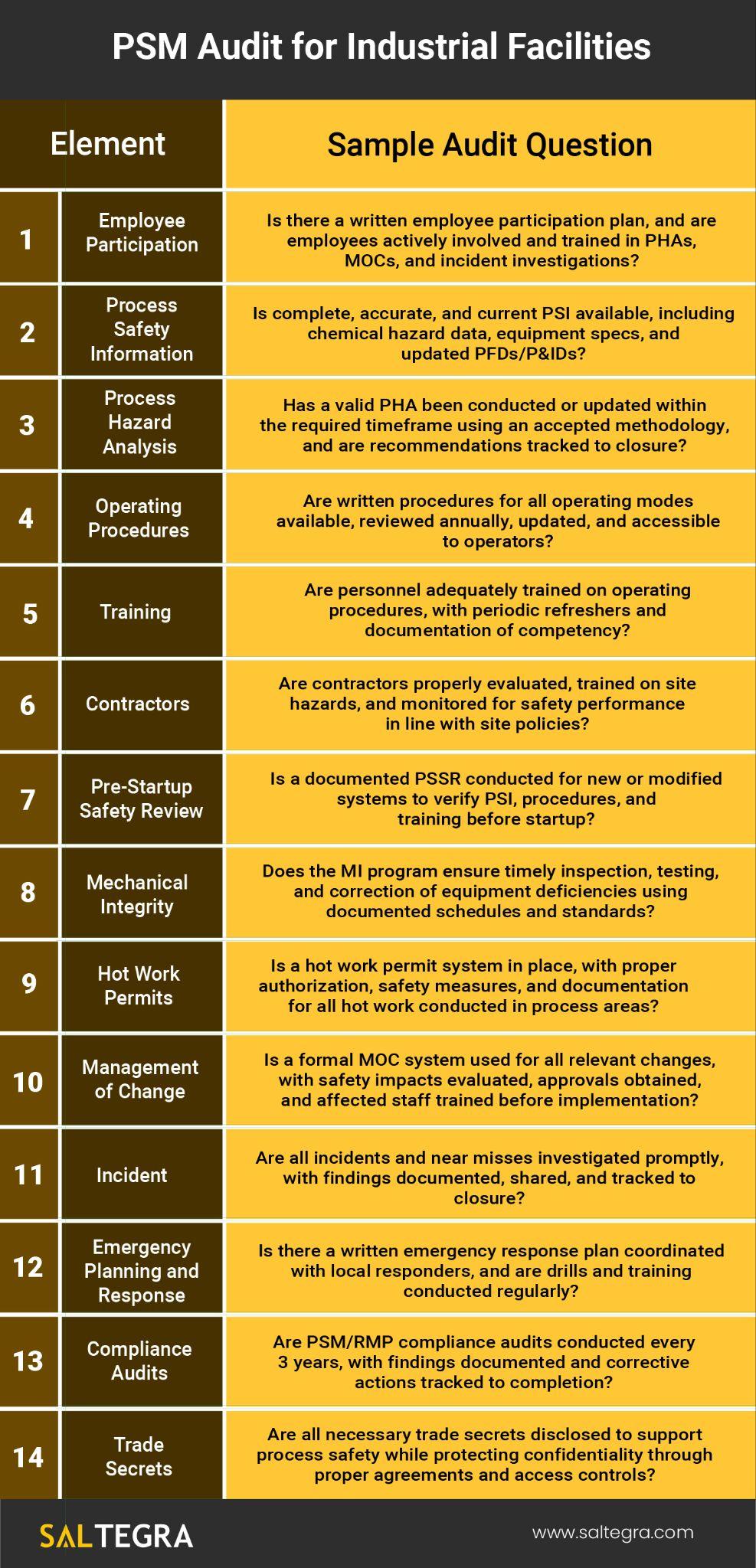
This article explains what a Process Safety Management (PSM) compliance audit involves and provides a practical checklist of requirements for evaluating each element of your safety program in the USA. While the checklist is a helpful starting point, it is not complete. Each facility must develop its detailed checklist based on its processes, industry, and regulatory requirements.
In many cases, companies benefit from hiring third-party auditors, like Saltegra Consulting, who can provide an objective and thorough evaluation.
Key Elements to Review in a PSM, RMP, or CalARP Audit
1. Process Safety Information
- Is the chemical, process, and equipment information accurate and complete?
- Are Safety Data Sheets available and easy to access?
- Are process flow diagrams and piping drawings updated?
Example:
An audit finds that equipment changes were made, but the drawings were not updated. This results in a corrective action to revise documentation.
2. Process Hazard Analysis
- Are hazard studies done at least every five years?
- Are all hazards and safeguards properly identified?
- Are previous recommendations tracked to closure?
Example:
A relief valve recommended in a past study was never installed. The audit flags this and requires follow-up.
3. Operating Procedures
- Are written procedures available for normal, emergency, startup, and shutdown operations?
- Are procedures reviewed and kept current?
- Are procedures accessible to operators?
Example:
Operators are found using outdated procedures during shutdown. The PSM audit requires updating documents and retraining staff.
4. Training
- Are employees trained in procedures and hazards?
- Is training done regularly and documented?
- Are workers evaluated for understanding?
Example:
Records show missing refresher training. The audit requires that a schedule for regular training be put in place.
5. Mechanical Integrity
- Is there a program for maintaining critical equipment?
- Are inspections and test results recorded?
- Are deficiencies corrected without delay?
Example:
A pump overdue for maintenance was discovered during the audit. Immediate action is required to complete the task and document it.
6. Management of Change
- Are changes reviewed before implementation?
- Is there a procedure for reviewing safety impacts?
- Are documents updated after changes are made?
Example:
An auditor finds that a recent change was made to the process without review. Staff must be retrained and procedures reinforced.
7. Employee Participation
- Are employees involved in hazard reviews and safety planning?
- Are safety meetings held and feedback collected?
- Are worker suggestions followed up?
Example:
Operators say they are not consulted during safety reviews. The audit suggests setting up regular feedback sessions and tracking input.
8. Contractors
- Are contractors evaluated before work starts?
- Are they trained in site hazards?
- Is their performance monitored?
Example:
A contractor begins welding without proper training. The audit recommends changes to orientation and enforcement procedures.
9. Incident Investigation
- Are all incidents and near misses reviewed?
- Are root causes identified and actions tracked?
- Are lessons shared with all staff?
Example:
A near miss was not investigated. The audit requires a process where all events are documented and reviewed.
10. Emergency Planning and Response
- Is there a written emergency plan?
- Are drills conducted and reviewed?
- Are workers trained in emergency actions?
Example:
A recent drill showed confusion about evacuation routes. The plan must be updated and employees retrained.
11. Pre-Startup Safety Review
- Are reviews done before new or changed systems are started?
- Are systems tested before operation?
- Are records of the review complete?
Example:
A new unit was started without a review. The audit requires immediate documentation and policy reinforcement.
12. Hot Work Permit
- Are permits issued for welding and cutting?
- Are fire safety checks done before work starts?
- Are permits closed after work is done?
Example:
Welding was done without a permit. The audit calls for staff retraining and a stronger permit system.
13. Trade Secrets
- Are workers and contractors given enough information to work safely?
- Are confidentiality agreements in place when needed?
Example:
A contractor lacked key safety information due to trade secret limits. The audit recommends clear procedures that balance safety and confidentiality.
14. Compliance Audits
- Are audits done every three years?
- Are findings documented and addressed?
- Are previous reports kept on file?
Example:
The last audit was done four years ago. The audit notes this and requires immediate planning for a new audit.
This Checklist Is Just a Starting Point
The checklist above helps guide an audit, but it is not enough on its own. Each facility must adjust the checklist to reflect its equipment, hazards, and risks. Facilities in California must also include CalARP-specific items such as seismic review, coordination with local responders, and public information. Specialized industries like oil refining, ammonia refrigeration, or chemical manufacturing may also need deeper technical checks.
Using third-party auditors can strengthen your audit. They bring fresh insight, can point out gaps that internal teams miss, and help prepare your team for regulatory inspections.
Documentation and Follow Through
An audit is only useful if its results are acted on. Each facility must:
- Document all findings and recommendations
- Assign responsibilities and deadlines
- Confirm that corrective actions are completed
- Keep audit records for reference and inspection
Audits are not just for compliance. They are tools to improve systems, reduce risk, and build a safer workplace.
Conclusion
Process Safety Management (PSM) compliance audits are essential in keeping facilities in the USA safe and compliant in industry requirements. Each part of the program must be checked regularly and thoroughly. From hazard information and operating procedures to contractor safety and emergency planning, every element must be reviewed.
Start with a clear checklist. Adjust it to match your industry, processes, and location. Make sure all gaps are identified, corrective actions are taken, and records are maintained.
For companies looking to strengthen their audit process or bring in a third-party perspective, Saltegra Consulting offers expert support in conducting compliance audits, identifying risks, and guiding corrective actions. Our team works with you to ensure safety programs are not just complete but effective.