
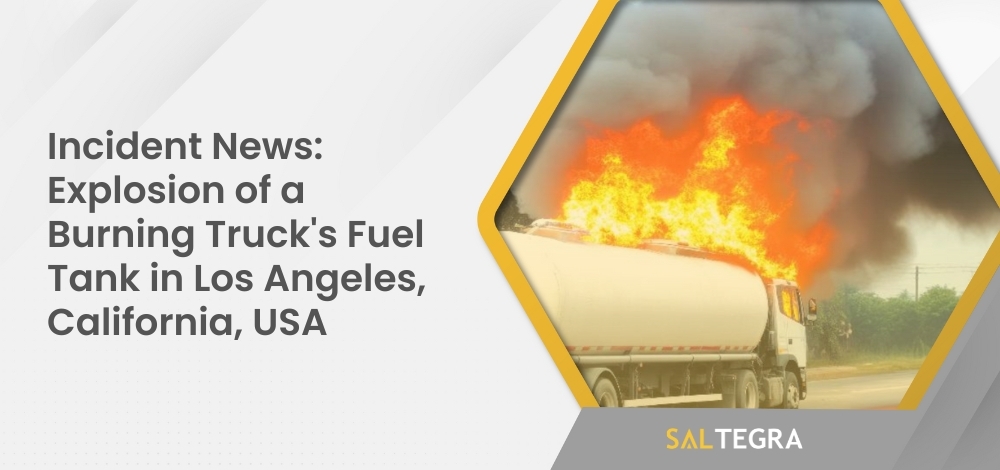
Incident News: Explosion of a Burning Truck’s Fuel Tank in Los Angeles, California, USA
Author

Related posts

The Importance of an Effective PHA/HAZOP Closeout Process
Process Hazard Analyses (PHAs) and Hazard and Operability Studies (HAZOPs) are cornerstones of effective Process Safety Management. Yet, even the [...]
Read more
Learning from Incidents: A Critical Resource for HAZOP Studies
Through years in the chemical process industry witnessing incidents and their impacts over the last decade, I’ve deeply valued the wealth [...]
Read more
Incident News: Machinery Flash Fire in Orange County, Texas, United States
A fatal industrial accident occurred at Optimus Steel in Orange County as reported by Captain Joey Jacobs. The incident occurred around 2 p.m. on [...]
Read more
Proposed Rule Update for Petroleum Refinery PSM in Washington State
The state of Washington is taking a significant step forward in modernizing Process Safety Management (PSM) standards for petroleum refineries. [...]
Read more
On February 15, 2024, in Wilmington, Los Angeles, an explosion from a truck’s fuel tank injured nine (9) firefighters, with two (2) requiring hospitalization, according to fire department officials. The truck involved in the incident utilized compressed natural gas, contained in two 100-gallon cylinders mounted on its sides, complicating safety protocols for emergency responders.
The nature of the truck’s fuel source, compressed natural gas, poses unique challenges compared to traditional gasoline-powered vehicles, especially for firefighters responding to such emergencies. Uncertainty remains about whether the responding firefighters were aware that the burning vehicle was powered by natural gas, as vehicles of this type are typically marked with a diamond-shaped decal indicating their fuel system. The presence and visibility of such a sticker on the truck during the emergency response are still unknown.
This incident serves as a reminder of the need for heightened awareness and specialized training for emergency responders on the hazards of alternative fuels like compressed natural gas. It highlights the importance of clear vehicle identification for quick and safe emergency responses, alongside the necessity of comprehensive risk assessments and tailored emergency plans to manage such incidents effectively. This incident reiterates the critical importance of regulatory compliance, best practices, and a safety culture that prioritizes protecting the public and first responders, emphasizing continuous adaptation of safety measures and protocols.
Read more: https://lnkd.in/gmxKbKNf