What Are the OSHA Compliance Requirements for Process Safety Management Audit?
Introduction
Following industry standards and regulations is crucial for maintaining trust and integrity in today’s business world. Compliance audits, conducted by independent auditors, assess how well a company adheres to these standards, frameworks, and regulations. These audits ensure that a company’s PSM processes align with OSHA standards and provide an objective view of compliance, highlighting areas for improvement.
Compliance audits are vital because they encourage businesses to consider more than just profits. Some business owners might overlook ethical practices or safety measures without proper oversight. Compliance regulations help companies to meet necessary standards, safeguarding their bottom line and employees, customers, and other stakeholders. These audits are designed to ensure compliance, not to punish businesses.
Frequency and Scope of PSM Compliance Audits
Process Safety Management (PSM) compliance audits in California USA must be conducted every three years. Companies must ensure PSM compliance by verifying that procedures and practices are correctly implemented. Audits should include a plan for ensuring compliance, documenting results, identifying corrective actions, and conducting field inspections.
The audit process reviews adherence to PSM requirements, identifies areas for improvement, and examines documentation. It involves facility inspections, employee interviews, and identifying compliance gaps. A Report of Findings outlines deficiencies, corrective actions, and trends. Companies must retain the two most recent reports for inspection, but are not required to submit them to OSHA.
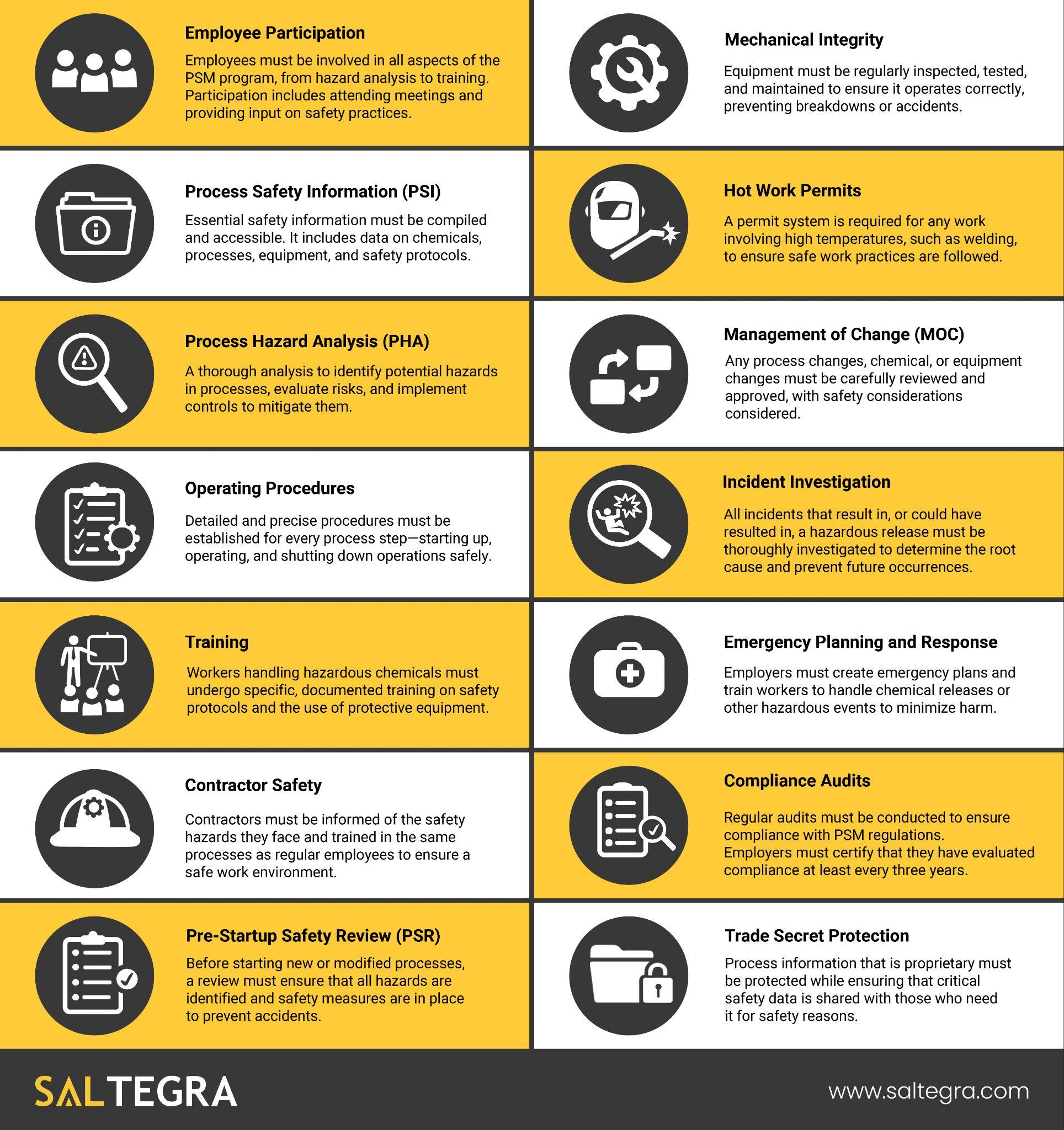
Key Compliance Audit Requirements
Compliance audits evaluate an organization’s adherence to industry standards and safety protocols. They help identify areas for improvement and ensure practices align with regulations. Key components include the audit report, deficiency identification, corrective actions, employee involvement, and specific requirements beyond standard federal regulations.
Audit Report:
The audit report is a formal document that outlines the findings of the compliance audit. It provides a comprehensive review of the organization’s adherence to required standards, including both strengths and areas for improvement. The report must be signed by a responsible manager to confirm that the company is compliant or to identify any deficiencies.
Deficiencies Identification:
During the audit, any deficiencies or non-compliance issues are identified and documented for further action. These deficiencies can range from minor procedural issues to significant safety risks, and they must be addressed to ensure the organization meets all necessary standards and regulations. Proper documentation helps track these issues over time for future audits.
Corrective Actions:
After identifying deficiencies, corrective actions must be implemented to rectify the issues and bring the organization into compliance. These actions are detailed in the audit report and are intended to resolve gaps in processes, safety protocols, or documentation. The responsible parties must monitor the effectiveness of these actions to ensure continued compliance.
Employee Involvement:
Employee involvement is a critical component of the compliance audit process. Interviews with personnel at all levels provide valuable insight into their knowledge of safety protocols, emergency procedures, and compliance requirements. Ensuring employees are actively engaged helps reinforce a culture of safety and compliance within the organization.
Additional Requirements for California Refineries:
California refineries are subject to additional regulatory requirements beyond standard federal regulations. These include stricter safety measures and frequent inspections to ensure compliance with state-specific environmental and safety standards. Compliance audits in these refineries must address these additional state-level requirements to maintain operations. These requirements include:
Root Cause Analysis (RCA):
Root Cause Analysis (RCA) is a methodical approach to identifying underlying causes of incidents, focusing on systemic issues rather than immediate causes. By addressing these root causes, employers can prevent future incidents, improve safety, and reduce risks. RCA involves asking “what,” “why,” and “how” questions, using tools like brainstorming, checklists, and event trees to investigate problems.
Hierarchy of Hazard Control Analysis (HCA):
The Hierarchy of Hazard Control Analysis (HCA) is a systematic approach to prioritize safety measures based on their effectiveness in mitigating risks. It categorizes controls from the most effective (elimination of the hazard) to the least effective (personal protective equipment). By applying HCA, companies can implement the most efficient hazard controls to ensure employee safety.
In preparation for conducting a Process Safety Management (PSM) audit in California USA, it’s crucial to collect and review the following important documentation.
- Risk Assessments: Identifying potential hazards and the safety measures in place.
- Hot Work Permits: Records for activities involving open flames or high-temperature work.
- Management of Change: Documentation of significant process changes, ensuring they are technically safe and acceptable.
- Incident Investigations: Records of past incidents, including root cause analysis and corrective actions taken.
- Competence Assurance: Training and competency records for both site personnel and contractors.
- Pre-Startup Safety Review: Safety check documentation for processes or equipment before restarting.
- Equipment Inspections: Records of routine equipment inspections and maintenance activities.
- Preventive Maintenance Records: Document maintenance programs in line with required standards.
- Previous PSA and PSM Audit Reports: Past audit reports to help inform the current evaluation.
Most Commonly Cited OSHA Standards During Compliance Audits
Listed below are the most commonly cited OSHA Standards during compliance audits.
Hazard Communication (29 CFR 1910.1200)
This standard requires employers to inform and protect workers from chemical hazards through proper labeling, Safety Data Sheets (SDS), and training. Common violations include failing to implement a written hazard communication program, not providing employee training on hazardous chemicals, and not maintaining accessible SDS or chemical labeling.
Respiratory Protection (29 CFR 1910.134)
This standard requires employers to establish and maintain a respiratory protection program, including respirator selection, employee training, fit testing, medical evaluations, and maintenance. Common violations include failure to conduct medical evaluations for respirator use, not performing fit testing, and lacking a written program with site-specific procedures.
Control of Hazardous Energy (Lockout/Tagout) (29 CFR 1910.147)
Employers must implement Lockout/Tagout procedures to control hazardous energy during equipment maintenance and ensure worker safety. Common violations include not having an Energy Control Procedure, insufficient training, and failure to conduct annual inspections.
Powered Industrial Trucks (29 CFR 1910.178)
This standard covers the requirements for powered industrial trucks, including design, maintenance, operation, and operator training. Common violations include improper operation, lack of refresher training, failure to certify operator training, and failure to conduct pre-operation inspections.
Machinery and Machine Guarding (29 CFR 1910.212)
This standard requires proper machinery guarding to protect workers from hazards such as rotating parts, flying chips, and sparks. Common violations include failure to provide necessary machine guarding, inadequate point-of-operation guarding, and improperly secured machine guards.
Conclusion
Compliance audits from experts like Saltegra Consulting are crucial for helping organizations meet safety and regulatory standards, particularly in industries where employee safety is critical. Regular audits identify areas for improvement, address deficiencies, and foster a culture of safety.
By adhering to federal and state regulations, businesses can minimize risks, enhance efficiency, and protect their reputation. Prioritizing compliance audits ensures a safe working environment and long-term success.