How Should Implementing Agencies Conduct Risk Management Plan (RMP) Audits?
Introduction
According to Section 112(r) of the Clean Air Act, industrial facilities in the US that handle significant amounts of highly hazardous chemicals (HHCs) are required to adhere to the Risk Management Program (RMP) federal compliance audits. The objective of this initiative, which is enforced by the Environmental Protection Agency (EPA), is to prevent accidental releases of HHCs. Facilities go through RMP audits, a methodical procedure that examines safety procedures, documentation, and the facility’s capacity to handle chemical risks, as well as verifying and assessing the facility’s compliance with RMP requirements.
Since the RMP rule was revised in 2024, audits have become even more important as authorities look to increase accountability and guarantee safer operations across all industries. Audits are more than just checking boxes; they are essential for spotting flaws, encouraging best practices, and averting disastrous events.
What Are the Criteria for Facilities To Be Audited?
The EPA does not audit all Risk Management Plan (RMP)-covered establishments according to a set schedule. Rather, audits are carried out using a risk-based methodology, concentrating on facilities that have previously experienced compliance problems or provide a greater risk of unintentional releases.
40 CFR Part 68.220 states that the following standards are used to choose which facilities will be audited:
- Accident History
Audits are more likely to occur at facilities with a history of incidents, particularly those that led to emergency response activation or off-site repercussions. - Accident History of Other Facilities in the Same Industry
Similar facilities may be audited if a certain industry sector has demonstrated a pattern of accidents or non-compliance. - Quantity of Regulated Substances
Facilities that surpass the regulation’s threshold volumes are scrutinized more closely. - Hazards Identified in the RMP
A federal compliance audit in the USA may be initiated if the submitted Risk Management Plan (RMP) identifies serious risks, such as the possibility of off-site repercussions, toxic plumes, or explosive incidents. - Proximity to Public and Environmental Receptors
Facilities close to hospitals, schools, densely populated areas, or environmentally sensitive areas are given priority. - Presence of Regulated Substances
The presence of regulated substances affects audit prioritizing, especially when it comes to chemicals that are acutely toxic, combustible, or reactive.
Risk Management Plan Auditing Process
In addition to identifying areas for improvement, the RMP auditing process is a systematic cycle that guarantees a facility complies with federal safety regulations. There are five (5) stages shown below:
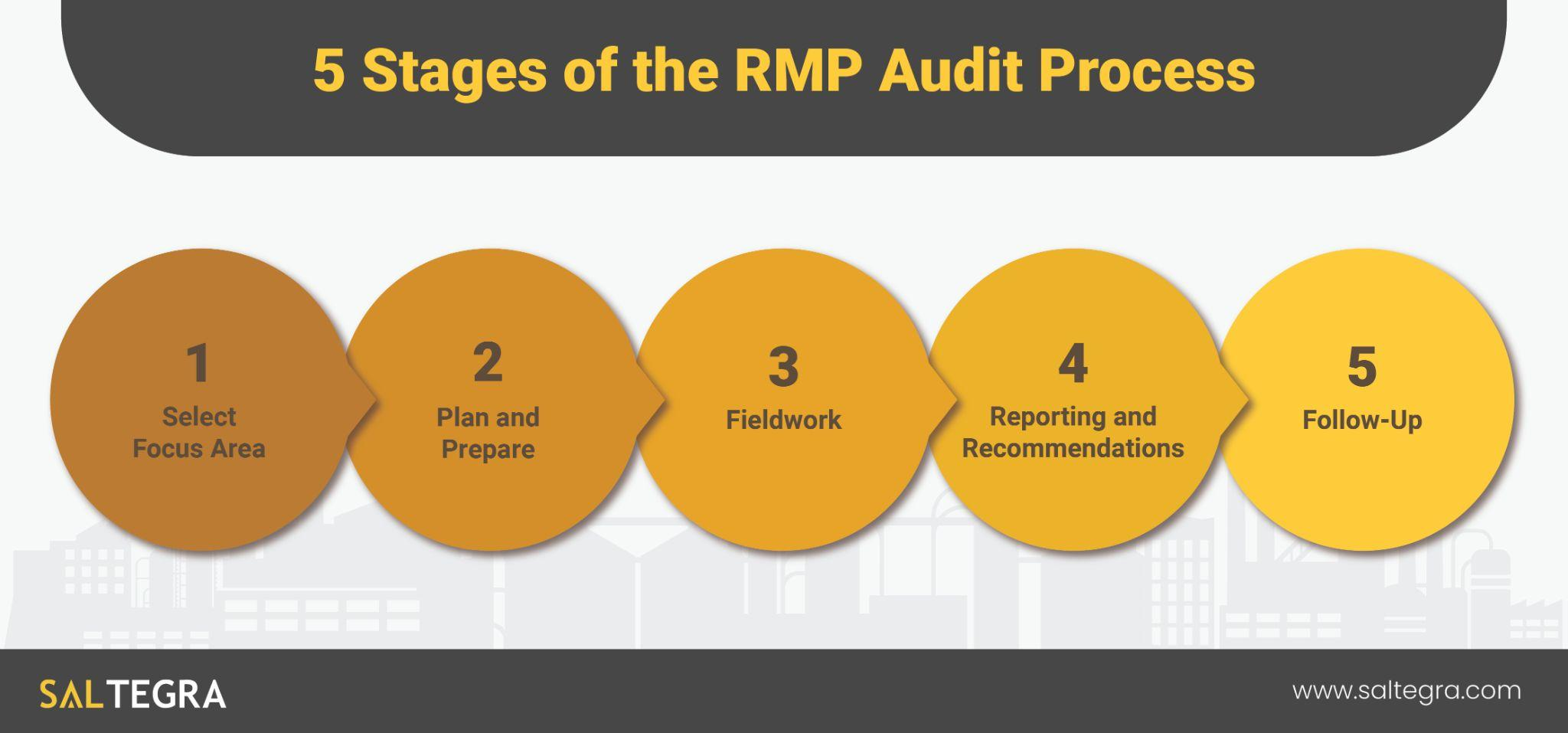
- Select Focus Area
Priority areas are first determined by the auditing firm using the facility’s RMP submission, past incident history, and regulatory concerns. Depending on anticipated risk, these focal areas may include mechanical integrity, emergency response, process safety information, or hazard evaluations. - Plan and Prepare
RMP, operational procedures, training records, and previous audit findings are among the documents that auditors carefully examine before the site visit. Creating audit checklists and organizing logistics for a productive on-site inspection are part of this step. - Fieldwork
In the onsite audit, the facility is physically inspected, staff members are interviewed, compliance measures are confirmed, and real-world work practices are observed. Auditors evaluate whether the facility follows RMP regulations and if documented processes are followed in daily operations. - Reporting and Recommendations
The auditors put their findings together in a thorough report. This covers any infractions or gaps found, best practices noted, and customized suggestions for remedial measures. Typically, facilities are given time to examine and respond to findings. - Follow-Up
To guarantee continued compliance, facilities could be asked to provide paperwork attesting to the closure of results or participate in follow-up visits.
After-Audit Actions to Enhance Risk Management
The audit shouldn’t be over when the auditors depart from the facility. Post-audit procedures must be carried out promptly and methodically to improve risk management. To guarantee long-term safety and regulatory compliance, several steps are essential:
- Corrective and Preventive Actions (CAPA)
The facilities must carry out the remedial measures specified in the audit report. It is also strongly advised to take preventive measures to ensure that similar problems do not repeat. - Root Cause Analysis (RCA)
When non-compliances are identified, conducting an RCA can help identify systemic issues beyond surface-level symptoms. - Updating RMP Documentation
The Risk Management Plan and related paperwork (such as SOPs, training records, and process hazard assessments) must be updated following the audit results. - Training and Communication
Employees must get training on new and updated procedures and be notified of audit results. - Follow-Up Verification
Regulatory agencies may make follow-up visits to ensure remedial measures have been successfully carried out. Facilities should be ready to provide proof of progress. - Continuous Improvement Program (CIP)
Facilities should establish or strengthen internal audit procedures, performance indicators, and safety measurements.
Facilities may drastically lower the risk of chemical accidents by viewing audit results as chances to improve safety procedures rather than as complaints or negative criticisms.
Conclusion
Audits of risk management plans are essential to guaranteeing the security of establishments that handle HHCs. Facilities may show compliance, increase operational safety, and foster confidence with the local community by implementing a thorough auditing procedure guided by EPA regulations under 40 CFR Part 68.
Businesses may go beyond compliance and establish a proactive risk management culture by comprehending the audit selection criteria, being well-prepared for the RMP audit process, and actively participating in post-audit improvement activities.
Saltegra Consulting LLC provides professional assistance in audit preparedness, compliance gap assessments, and training programs customized to your industry’s requirements, whether your facility is getting ready for an RMP federal compliance audit or wants to build better internal audit processes. Allow us to assist you in maintaining safety, compliance, and staying ahead of legal requirements.