
5 Steps in Assessing Performance Gaps Within Chemical Safety RMP
Introduction
Conducting a chemical safety Risk Management Plan (RMP) gap assessment in the USA is vital for identifying weaknesses and enhancing safety performance in chemical handling facilities.
A gap assessment is a crucial phase of RMP that determines areas that require improvement and assesses the effectiveness of existing systems. In a gap analysis, an organization’s current performance or practices are compared to internal goals, regulatory requirements, or established standards. This process helps find certain flaws that may jeopardize public safety, violate legal requirements, or lead to inefficiencies in operations. By comprehending these gaps, organizations can create focused action plans to improve their safety systems and overall risk management framework.
Gap analyses are essential for maintaining continuous development and operational excellence. Businesses that regularly assess gaps can stay compliant with RMP regulations, avoid issues, and align with best practices — especially in areas where environmental, safety, and health (ESH) performance is regularly monitored.
In the US, where adherence to these standards is strictly enforced, a thorough chemical safety gap analysis helps companies comply with EPA Risk Management Plan regulations while protecting workers, communities, and the environment. By using the hierarchy of hazard control and regularly performing gap assessments in RMP, facilities can improve operational reliability, strengthen their safety culture, and adhere to legislative requirements and industry best practices.
Purpose of Assessing Performance Gaps in RMP
Maintaining a strong RMP for plants handling hazardous chemicals requires evaluating performance gaps. When comparing existing systems to industry norms, legal requirements, or corporate safety objectives, gap evaluations assist in identifying deficiencies.
Gap evaluations assist in identifying present inadequacies and establishing reasonable goals, coordinating safety procedures with corporate goals, and cultivating an environment of responsibility and progress. This includes the following:
- Identification of Safety and Compliance Weaknesses
Assists establishments in identifying areas where their current safety procedures fall short of legal requirements (such as the EPA’s RMP criteria). - Prevention of Chemical Incidents
Proactively addresses system defects to improve worker and community safety by preventing loss of primary containment (LOPC), fires, explosions, and toxic releases. - Strategic Decision-Making
Demonstrates where performance falls short of safety and operational goals, which helps to guide resource allocation and improvement planning. - Regulatory Readiness
Aligns operations with industry and legal standards, lowering the risk of breaches and preparing facilities for audits and inspections. - Drive Continuous Improvement and Operational Excellence
Encourages a culture of safety improvement by integrating lessons learned, tracking performance, and setting goals.
RMP Gap Assessment Methodology
 A structured chemical safety risk management plan (RMP) gap assessment in the USA helps facilities compare current practices with regulatory and safety standards, such as the EPA Risk Management Plan. This procedure finds performance gaps and directs enhancements in operations, compliance, and chemical safety. The five key steps for carrying out a successful gap assessment are listed below.
Step 1: Set Objectives and Standards
- Define the industry, internal, and regulatory safety standards of the facility.
- Define performance goals and benchmarks for risk management and chemical handling procedures.
- Establish the assessment scope.
Step 2: Evaluate Current Performance
- Gather data by conducting site inspections, documentation checks, and interviews.
- Examine current risk and safety management techniques, protocols, and controls.
- Collaborate and involve needed departments (engineering, safety, operations).
Step 3: Identify and Analyze Gaps
- Compare defined standards with actual practices.
- Use proper analysis tools to determine root causes.
- Classify gaps according to severity, urgency, and risk ranking.
Step 4: Develop and Execute Action Plans
- Create a structured plan which includes deadlines, tasks, responsible person/team, and corrective actions.
- Incorporate both short-term and long-term solutions.
- Use project or compliance tracking tools to be updated on implementation status.
Step 5: Review, Validate, and Continuously Improve
- Use audits or follow-up reviews to validate the effectiveness of implementation.
- Revisions should be reflected in the RMP and associated documents.
- Schedule regular assessments.
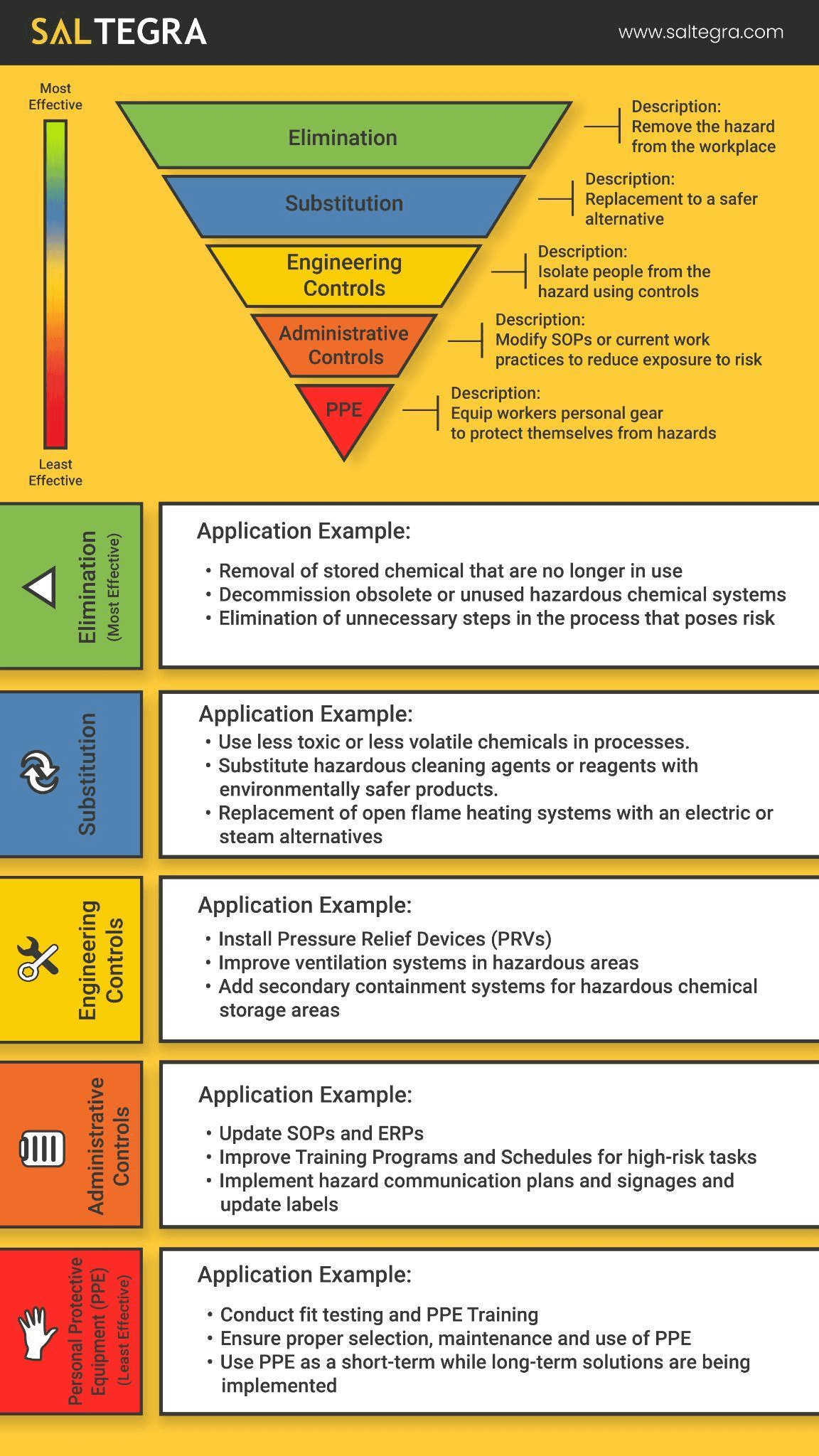
Hierarchy of Hazard Control
The hierarchy of Hazard Control is a regulatory framework used to recommend solutions to close performance gaps in risk management plans (RMPs). Through its classification, it primarily controls measures from most to least effective: Elimination, Substitution, Engineering Controls, Administrative Controls, and Personal Protective Equipment (PPE). This hierarchy ensures that suggestions center on longer-term, more efficient ways to reduce the risks associated with hazardous chemicals.
Conclusion
Identifying and addressing gaps in RMPs is essential for ensuring chemical handling facilities’ safety, compliance, and efficiency. With this structured methodology, organizations can systematically uncover weaknesses and implement targeted solutions, starting with setting objectives and continuing to improve.
By conducting chemical safety risk management plan (RMP) gap assessments, businesses stay aligned with industry and regulatory expectations in the USA and cultivate a proactive safety culture that protects workers, communities, and the environment. Review your facility’s current RMP, apply the 5-step methodology, and integrate the Hierarchy of Controls to build a safer, stronger, and more compliant operation.