List of Amended Rules in EPA’s RMP Rule and How to Stay Compliant
Introduction
Safety and adherence to regulations are crucial in chemical facilities that handle highly hazardous chemicals (HHCs). One of the most important laws in chemical safety in the United States (US) is the Environmental Protection Agency’s (EPA) Risk Management Plan (RMP). The initiative seeks to stop or reduce the unintentional release of hazardous materials that could endanger the environment, nearby communities, and people.
Stakeholder input and evolving safety concerns have led the EPA to finalize major revisions to the RMP regulation. These changes are the outcome of years of discussion, compromise, and reexamination, starting with the initial adjustments made during the Obama administration and continuing through revisions during the Trump and Biden administrations.
Why Did the EPA Reconsider the RMP Amendment’s Final Rule?
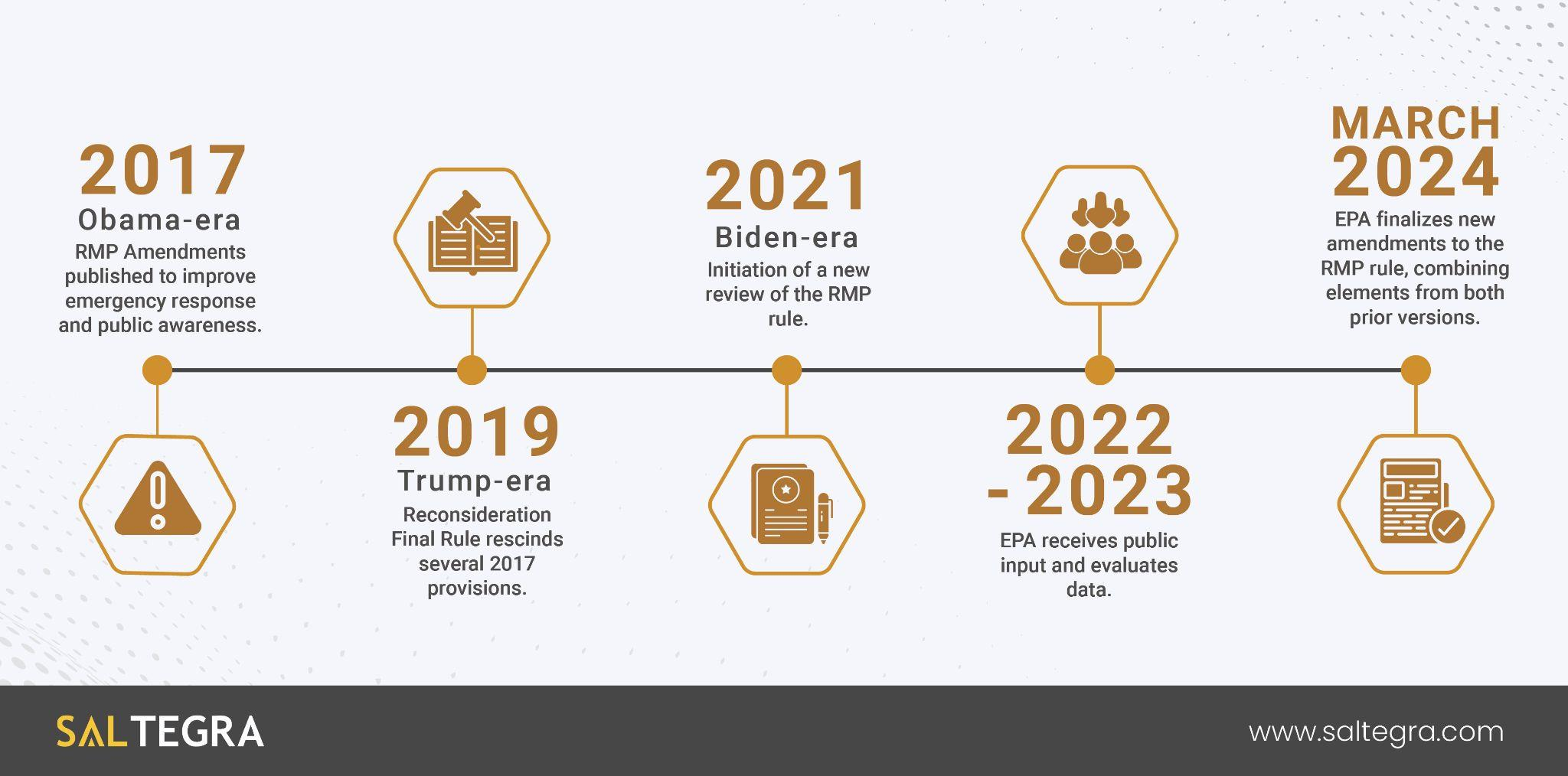
Major chemical events and political changes have greatly influenced the development of the current RMP rule. Massive incidents, such as the 2013 explosion in West Texas, US, that exposed severe flaws in the current chemical safety procedures, started the initial regulation revisions in 2017.
However, the EPA reexamined and repealed several regulations in 2019 during the Trump administration, claiming issues with cost and security. Some of the stricter restrictions that were proposed in 2017 were eliminated or changed in the 2019 Reconsideration Final Rule. Avoiding duplication of current safety efforts, safeguarding sensitive data, and simplifying compliance requirements for establishments already adhering to other safety standards were among the main arguments.
EPA’s goal to better balance community right-to-know, efficient risk management, and realistic industry implementation is reflected in the current reassessment. The most recent revisions, which were completed in March 2024, attempt to allay previous worries while restoring some safety precautions that environmental and public groups have determined are essential.
It is helpful to reflect on the regulatory route that shaped the 2024 modifications to understand their significance fully. Thus, the chemical safety RMP rule has undergone multiple adjustments over the years due to significant chemical-related incidents, administrative changes, and continuous stakeholder feedback, as shown in the timeline below.
What Does the RMP Final Rule Address?
- Improved Hazard Evaluation and Prevention Planning
Facilities are now required to carry out more comprehensive analyses of possible chemical dangers, which include assessing safer technologies and substitute procedures. By doing this, risks are lessened at their origin before problems arise. - Better Emergency Coordination with Local Response Teams
Facilities must actively collaborate with the local emergency services to guarantee that responders are knowledgeable and prepared to manage possible chemical events. This includes practicing together and exchanging updated emergency response plans. - Safer facility design and operation
The rule seeks to lessen reliance on administrative or procedural controls by promoting the adoption of behaviors and technology that are inherently safer. - Enhanced accident investigation procedures
After events or near-misses, the rule requires a more thorough investigation procedure that includes root cause studies. This guarantees that facilities can recognize systemic flaws and take long-term corrective actions. - Greater public access to safety-related information
The final rule maintains transparency by enabling the public and local stakeholders to request and access relevant chemical hazard information, all the while balancing security considerations.
What Changes Are Included in EPA’s RMP Rule Change?
Modified Changes
- Safer Technology and Alternatives Analysis (STAA)
Facilities must assess safer substitutes for current procedures. This is required for Program 3 facilities in specific NAICS codes, such as chemical production and petroleum refining. - Improvements to Incident Investigation
Facilities must incorporate root cause analysis for catastrophic releases or near misses. - Employee Participation
Employers are required to make sure that employees participate in safety reviews and hazard assessments. - Third-Party Compliance Audits
It is now necessary to ensure independent verification of safety systems and procedures following a reportable occurrence.
When Will the Changes Be Implemented?
- May 2024 – Final rule takes effect 60 days after publication.
- March 2025 – General compliance deadline for the majority of provisions
- March 2026 – Deadline for STAA evaluations and third-party audits of covered facilities
- Ongoing – Facilities need to keep up with their RMPs, coordinate with emergency personnel, and continue maintaining records
Note: Compliance timelines vary depending on the nature of the changes.
How Do You Remain Compliant?
- Assess your Facility’s RMP Plan
Compare your current plan with the updated specifications. Find out if your facility is subject to the STAA requirement and if it is under Program 2 or Program 3. - Update Process Hazard Analyses (PHA)
Review your PHAs to make sure they consider the risks that exist now, possible safer substitutes, and the lessons from recent incidents. - Strengthen Emergency Coordination
Keep track of and confirm all correspondence and preparations with nearby emergency services. - Conduct Gap Assessments
Determine the areas where current safety procedures do not meet the updated RMP requirements, then coordinate with the team for corrective action plans. - Train Your Team
Implement training programs that raise staff members’ awareness of and involvement in safety protocols and process evaluations. - Consult with Experts
Collaborate with experts in hazard assessments, risk management, and compliance documentation.
Conclusion
The most recent modifications to the EPA’s Risk Management Program reflect a renewed focus on readiness, safety, and openness in the chemical processing sector. Although changing rules might bring up new difficulties, they also give facilities a chance to reaffirm their dedication to safeguarding individuals, communities, and the environment.
Your company may guarantee safety and success by comprehending the purpose of the regulation, adhering to compliance deadlines, and working with knowledgeable process safety specialists.
Do you need assistance understanding the new RMP rule? At Saltegra Consulting, we specialize in Process Safety Management (PSM) and chemical safety Risk Management Plan (RMP) compliance in the USA. Reach out now and let’s collaborate to create a safer future.