Top 5 Factors To Consider When Selecting a HAZID Facilitator
Introduction
In high-hazard industries such as oil and gas, petrochemicals, and energy, safety planning begins long before equipment is installed or systems go online. One of the most valuable tools used to identify and address risks early in a project is the Hazard Identification (HAZID) study. This structured, qualitative method brings together a cross-functional team to ask a critical question: “What could go wrong here?”
HAZID studies are typically conducted during the early planning or design phases before operations begin, before equipment is installed, and before changes become too costly to implement. They help project teams anticipate potential hazards related to process design, site layout, external events, and operational factors, giving organizations a proactive approach to risk management.
While HAZID is a proven and well-established method, its success relies on more than just checklists and guidewords. The true effectiveness of a HAZID session hinges on the person leading the discussion: the facilitator. The Hazard Identification (HAZID) study facilitator’s role is not to provide all the answers but to guide the team in asking the right questions, keep the conversation on track, and ensure all voices are heard. They create a structured and inclusive environment where critical issues can surface and be addressed.
A skilled HAZID facilitator is essential. Without one, even well-intentioned sessions can lose focus, be dominated by a few voices, or miss key risks entirely. The Hazard Identification (HAZID) study facilitators in the USA ensure the session remains aligned with its objectives, drives participation, and translates discussion into clear, actionable outcomes.
What Is the Role of the Facilitator in the HAZID Workshop?
The HAZID facilitator plays a critical role in leading the hazard identification process, not by providing all the answers, but by guiding the team to ask the right questions. Their responsibility goes beyond simply running the meeting or taking notes; they steer the discussion, ensure active participation from all team members, and maintain alignment with the study’s objectives.
By fostering a structured and inclusive environment, the facilitator helps ensure that all relevant perspectives are considered and that the team remains focused throughout the process.
Leading the Discussions
HAZID workshops often bring together a multidisciplinary team: engineers, operators, maintenance staff, safety professionals, and project leads. The facilitator helps the group move through each part of the process, using structured prompts and guidewords to explore risks systematically and ensure nothing is overlooked.
Encouraging Participation
In any risk workshop, there’s a risk of only a few voices dominating the conversation. A skilled facilitator creates space for quieter participants, asks clarifying questions, and helps bring input from all team members. This leads to a more balanced and complete view of the potential hazards.
Adapting to the Format
Today, many HAZID workshops are held virtually or in hybrid settings. A good facilitator is prepared for both. They use digital collaboration tools to keep people engaged, manage breakout discussions effectively, and adjust the session structure to prevent fatigue.
Delivering Clear Outcomes
Ultimately, the facilitator helps the team leave with something actionable. The value of a HAZID study lies in its outputs: documented hazards, causes, consequences, and recommendations. The facilitator works closely with the recorder or scribe to ensure that findings are documented accurately, concisely, and in a format that supports further action, such as detailed design changes, further studies, or operational controls.
Internal vs. External HAZID Facilitators
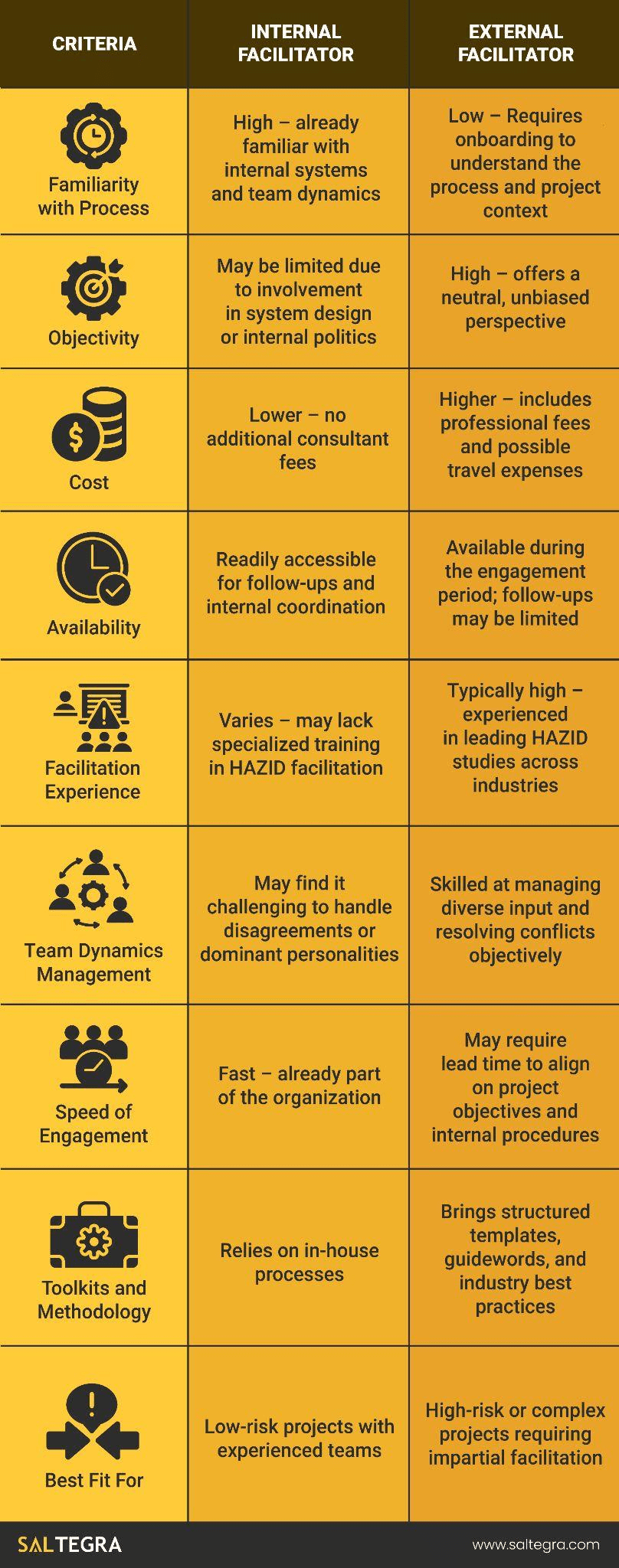
Another key decision companies face is whether to assign facilitation duties to someone within the organization or to hire an external specialist. Both options have benefits, and the right choice depends on the goals, complexity, and internal capacity of the organization.
What Should You Look for in a HAZID Facilitator?
Whether you’re assigning the role internally or hiring externally, the person leading your HAZID session should bring more than technical expertise. Look for someone who can create structure, manage a diverse group of stakeholders, and drive productive discussions that result in clear, actionable insights. Here are key qualities to look for:
Experience in HAZID Workshops
A HAZID identification facilitator should have real-world experience running HAZID sessions. They should understand the flow of a workshop, the types of discussions that emerge, and how to keep things moving without cutting off valuable input.
HAZID Training and Certification
While formal certification isn’t always required, training in hazard identification methods and process safety provides a solid foundation. This ensures the facilitator understands the framework, expectations, and outputs required.
Familiarity With Tools, Techniques, and Methods
A good facilitator knows how to use structured guidewords, prompt lists, and hazard documentation templates. They are familiar with industry standards like those outlined in CCPS guidance and can align the HAZID process with your organization’s internal procedures.
Ability To Lead and Encourage Communication
Facilitators need strong communication skills—not just to explain the process but to ask the right questions, manage disagreement, and support diverse perspectives in the room.
Industry Expertise
Finally, look for a HAZID study facilitator with experience in your sector. Someone who understands how upstream oil operations differ from chemical batch processing or what typical issues arise in utilities and energy systems can better guide the discussion and spot gaps others might miss.
Get Connected With Expert HAZID Facilitators at Saltegra LLC
At Saltegra Consulting LLC, we specialize in facilitating HAZID workshops that are structured, insightful, and results-driven. Our team brings experience from various industries, including oil and gas, power generation, chemicals, and manufacturing, and applies proven facilitation methods to deliver high-quality outcomes.
We offer:
- Full-service facilitation for complete workshop delivery
- Co-facilitation and support for internal teams
- Remote and in-person sessions tailored to your project’s needs
Our approach ensures that every session delivers meaningful insights that can inform design decisions, operational improvements, and compliance strategies. Whether you’re conducting a HAZID for a new project or reviewing an existing system, we’re ready to help.
Conclusion
The success of a HAZID study often comes down to who’s leading it. A qualified facilitator not only brings structure to the process but also helps your team uncover insights that might otherwise go unsaid. With the right person guiding the workshop, your team is better equipped to identify real risks and take meaningful action.
If you’re planning a HAZID workshop and want to get it right from the start, reach out to Saltegra. Our Hazard Identification (HAZID) study facilitators combine technical knowledge with real-world facilitation experience in the USA to help your team focus, collaborate, and make safer decisions.
Contact us today to learn more about our HAZID services and how we can support your next study.