
Diana Isis Velasco, Reyson Dave Dela Cruz, and Michael Saura
Keywords: OSHA Process Safety Management (PSM), EPA Risk Management Plan (RMP), Philippines chemical safety regulations, Systems Theory of Compliance, gap analysis
Abstract. This study analyzes the gaps between US OSHA PSM and EPA RMP standards and Philippine regulations using the Systems Theory of Compliance. The US standards offer detailed requirements for PSM, including specific intervals for Process Hazard Analyses (PHAs), compliance audits, and training. Philippine regulations, however, often lack this specificity, comprehensive documentation, and a strong focus on process safety. Key gaps include the absence of regulations for Pre-startup Safety Reviews (PSSR) and Management of Change (MOC). Recommendations include adopting structured compliance frameworks like ISO 45001, enhancing regulatory specificity, improving documentation practices, and emphasizing process safety management (PSM). By addressing these gaps, the Philippines can align its regulations with international standards, fostering a culture of safety, accountability, and sustainability within its chemical process industry, ultimately protecting both people and the environment. This approach aims to promote regulatory green lanes, reduce incidents, and enhance overall safety compliance.
Introduction
Process Safety Management (PSM) is a holistic management approach aimed at preventing incidents involving hazardous chemicals through systematic risk management and safety practices [1]. In Asia, the implementation and enforcement of PSM regulations vary significantly. PSM practices in countries like Japan are primarily based on a bottom-up approach, relying on corporate policies different from the top-down frameworks seen in the EU and the US [2]. The Philippines, despite having made strides in occupational safety and health (OSH) [3], still faces challenges in achieving comprehensive PSM standards.
The US Occupational Safety and Health Administration (OSHA) PSM standard (29 CFR 1910.119) and the Environmental Protection Agency (EPA) Risk Management Plan (RMP) rule (40 CFR Part 68) are globally recognized benchmarks for PSM. These regulations are characterized by comprehensive requirements covering 14 critical elements, including employee participation, process safety information, process hazard analysis, operating procedures, training, contractors, pre-startup safety review, mechanical integrity, hot work permit, management of change, incident investigation, emergency planning and response, compliance audits, and trade secrets [7, 8] as shown in Fig. 1. The robust framework provided by these regulations ensures thorough management of chemical process risks and emphasizes the importance of continuous improvement. They establish specific timeframes for essential activities, such as the revalidation of PHA every five years and CA every three years, ensuring that safety practices remain current and effective. Furthermore, they highlight the necessity for regular reviews and updates to maintain a high standard of safety and risk management [9].
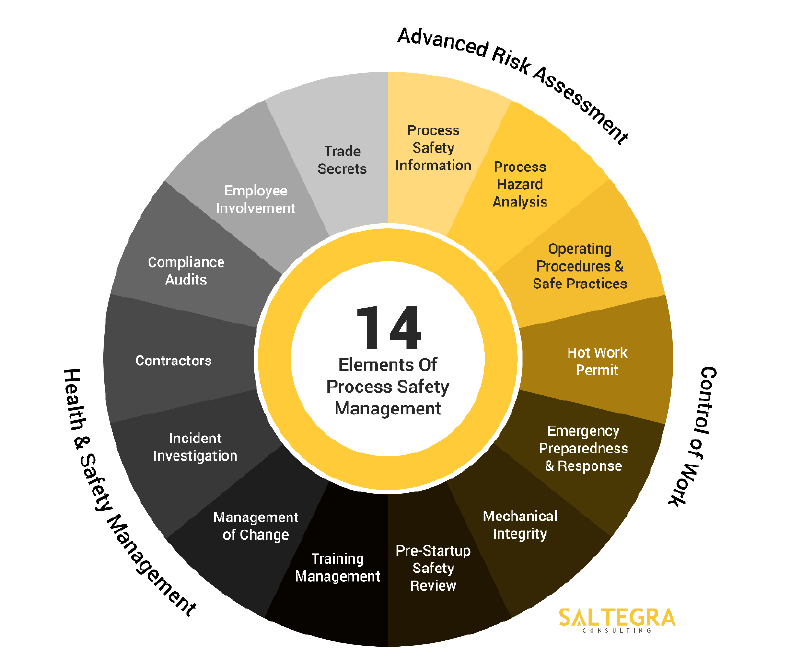 Fig. 1. The 14 Elements of Process Safety Management
On the other hand, a survey of the current Philippine regulations highlights a framework for occupational safety but reveals significant gaps in specific Process Safety Management (PSM) elements such as management of change (MOC), mechanical integrity (MI), pre-startup safety reviews (PSSR), incident investigation (II), and emergency planning and response (EPR) [4]. Furthermore, the focus of various regulatory bodies is fragmented as summarized in Table 1 [5]. This fragmentation indicates a lack of an integrated focus on preventing fires and explosions caused by hazardous chemicals, which is essential for comprehensive PSM. Each agency operates within its own mandate, but there is a need for a cohesive and unified regulatory approach that specifically targets the prevention of fires and explosions in the chemical industry.
Table 1. Philippine Government Agencies Responsible for General Safety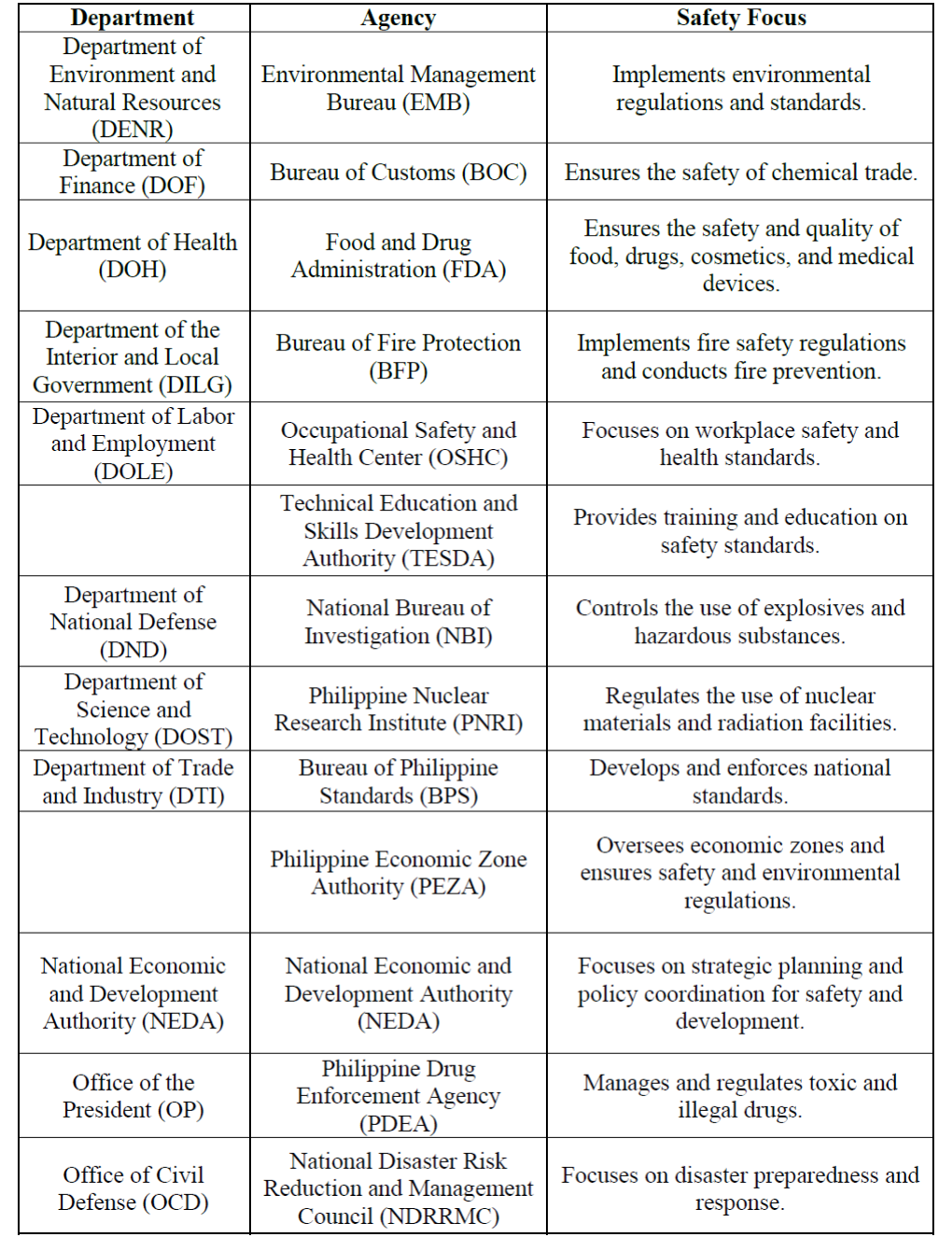
In addition, it was established that PSM practices in the Philippines rely heavily on individual corporate practices and are often confused with general occupational safety [3]. Only larger companies tend to comply with ISO standards or implement safety policies based on PSM principles. However, 95% of establishments in the Philippines are micro, small, and medium enterprises (MSMEs), which often either cannot afford the expensive compliance certifications or are unaware of PSM’s existence [6].
This research aims to identify and analyze the gaps in Philippine safety regulations by comparing them with US OSHA PSM and EPA RMP standards using the Systems Theory of Compliance. By benchmarking against these established standards, the study seeks to significantly benefit the Philippine chemical process industry through promoting regulatory green lanes, reducing incidents, safeguarding workers’ health, and enhancing environmental protection measures. Ultimately, this approach aims to improve process safety and prevent accidents, thereby protecting both people and the environment. The study aspires to bridge the gap between current Philippine regulations and international standards, fostering a culture of safety, accountability, and sustainability within the chemical industry. However, the study is limited by its focus on regulatory comparisons and may not fully address the organizational and industry-specific challenges faced by facilities in implementing these PSM standards.
Systems Theory of Compliance
The Systems Theory of Compliance states that compliance within an organization is an interconnected and dynamic system composed of various actors, institutions, and relationships. It conceptualizes compliance as more than just a process; it is a comprehensive system influenced by both economic and institutional forces. These forces impact the behavior and practices of different units within the compliance system, including regulators, firms, executives, and inter-organizational structures [10].
The Systems Theory of Compliance has been used to identify regulatory gaps by analyzing the interplay of economic, psychological, and sociological factors in compliance behavior [11]. It helps evaluate the effectiveness of internal compliance systems within businesses and highlights areas where regulations may not sufficiently influence organizational practices [12]. Additionally, studies in healthcare show that regulatory frameworks must incorporate mechanisms that motivate and support compliance efforts across all organizational levels [13]. Similar studies with regulatory focus, considered a comparative analysis of the top-down regulatory frameworks of the US and EU with Japan’s bottom-up, operator-driven safety activities, highlighting the importance of continuous feedback and employee involvement in achieving effective compliance [2].
This study will focus solely on the role of regulators, highlighting the economic and institutional determinants of process safety practices. For simplicity, the behaviors and practices of firms, executives, and inter-organizational structures will not be considered. This limitation acknowledges that while a broader analysis would offer deeper insights, the focus on regulatory aspects alone provides valuable prescriptive recommendations for improving process safety compliance practice within the Philippine context.
The conceptual framework for this study is shown in Fig. 2.
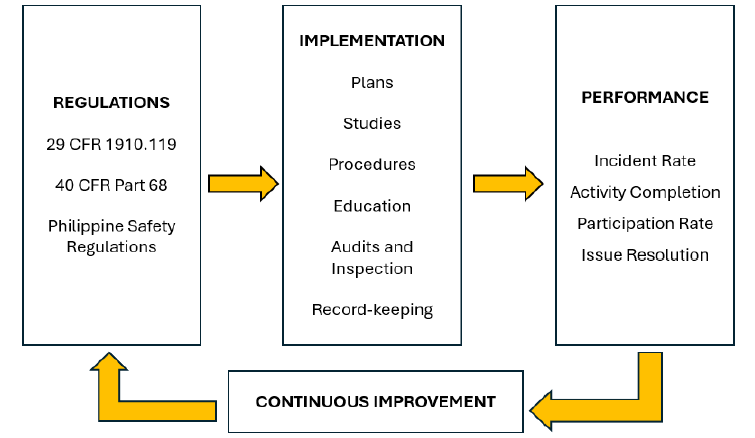 Fig. 2. Conceptual Framework of the Study
In the figure, the Systems Theory of Compliance was systematically used to analyze the gaps between Philippine PSM regulations and the US OSHA PSM and EPA RMP standards. This theory views compliance as an interconnected system of inputs, processes, outputs, and feedback mechanisms. The input involves the resources, requirements, and initial conditions that drive the compliance system. The process consists of the actions and activities that transform inputs into compliant outputs. The output yields the tangible and intangible results of the compliance processes. The feedback stage provides information on system performance, which is used for continuous improvement.
Methodology
A comprehensive gap analysis was conducted to identify deficiencies in the input, process, output, and feedback mechanisms for each of the fourteen (14) benchmark PSM elements. Gap analysis is a systematic approach used to compare current regulatory frameworks with desired standards, identifying areas where improvements are needed. This process included a thorough review of existing Philippine regulations, such as Republic Act 11058, Republic Act 6969, DENR, DOLE, and DOE regulations, and comparing them against the US OSHA PSM (29 CFR 1910.119) and EPA RMP (40 CFR Part 68) standards. Following the identification of gaps, trends and patterns were analyzed to discern common deficiencies and systemic issues. Based on these insights, specific recommendations were formulated to enhance the overall effectiveness and compliance of PSM practices in the Philippine chemical process industry.
Results and Discussion
Employee Participation. Philippine regulations on employee participation in safety programs focus broadly on occupational safety and health relying on OSH Standards without specific emphasis on process safety risks. They require regular safety meetings and continuous communication but do not specify the frequency or detailed scope of these meetings. Additionally, while Philippine regulations mandate documentation of safety measures, they lack the detailed records related to process safety management found in US regulations. Furthermore, although both frameworks emphasize regular audits and updates, Philippine regulations are less specific about the frequency and scope of these audits compared to the detailed requirements outlined in US standards.
Table 2. Employee Participation Gap Analysis Results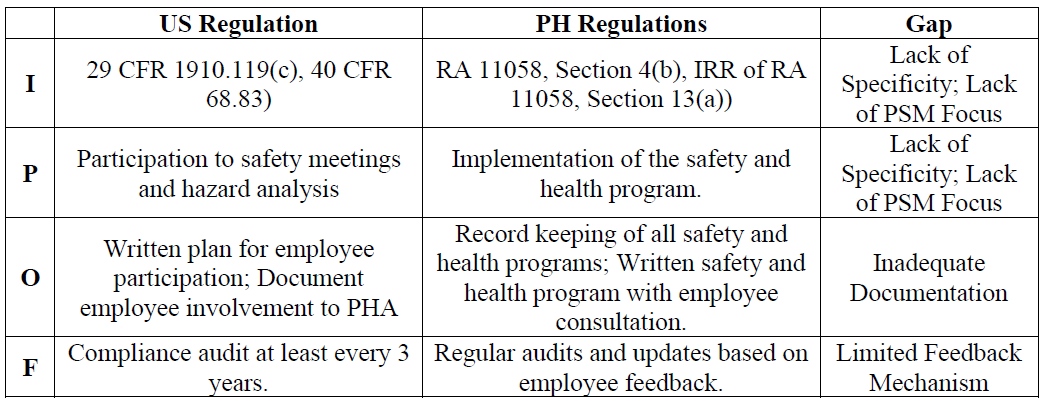
Process Safety Information. Philippine regulations on process safety information require detailed safety data on chemicals, technology, and equipment, similar to US OSHA and EPA RMP standards. However, the focus of these regulations is different. US regulations emphasize preventing fires, explosions, and toxic releases, while Philippine regulations, such as those from PDEA, NBI, and RA 6969, focus on controlled chemicals with varying lists and often unquantified amounts to be considered controlled.
Table 3. Process Safety Information Gap Analysis Results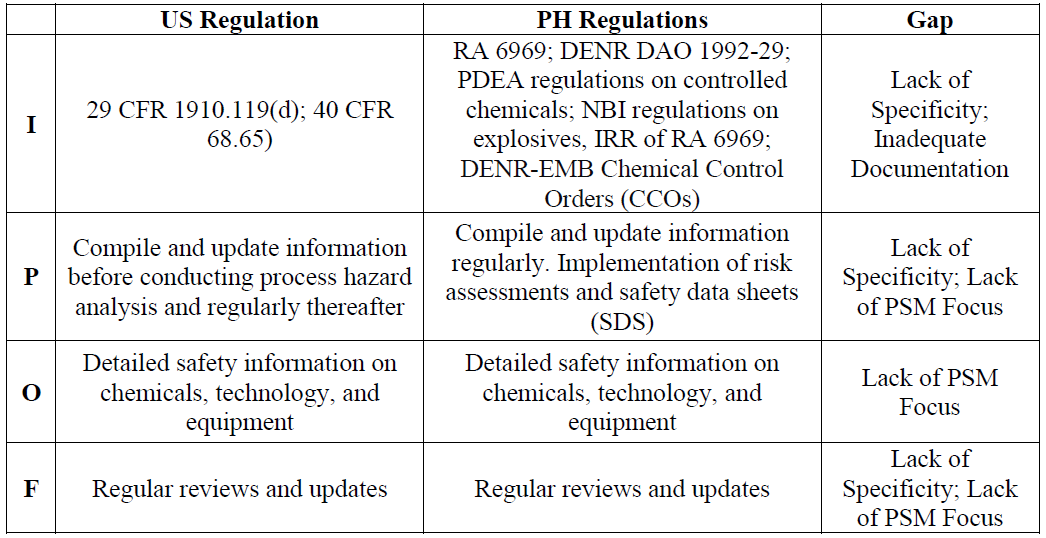
Process Hazard Analysis. Philippine regulations on hazard analysis and process safety exhibit significant gaps compared to US OSHA and EPA RMP standards. The US mandates specific intervals for Process Hazard Analyses (PHA) every five years and emphasizes direct process safety risks, including fires and explosions. In contrast, Philippine regulations, such as RA 6969 and DENR Administrative Orders, primarily focus on environmental risks through Environmental Risk Assessments (ERA) and lack specific intervals for HIRAC (Hazard Identification, Risk Assessment, and Control) processes. This fragmentation across various agencies, including DENR, DOLE, and PDEA, results in inconsistent safety management.
Table 4. Process Hazard Analysis Gap Analysis Results
Operating Procedures. Philippine regulations on operating procedures mandate detailed procedures for safe operations and emphasize regular reviews and documentation. However, unlike US OSHA and EPA RMP standards, which specify annual reviews and audits, Philippine regulations use more general terms like “regular” without specifying exact intervals. This difference in specificity can lead to inconsistencies in implementation and potentially outdated procedures.
Table 5. Operating Procedures Gap Analysis Results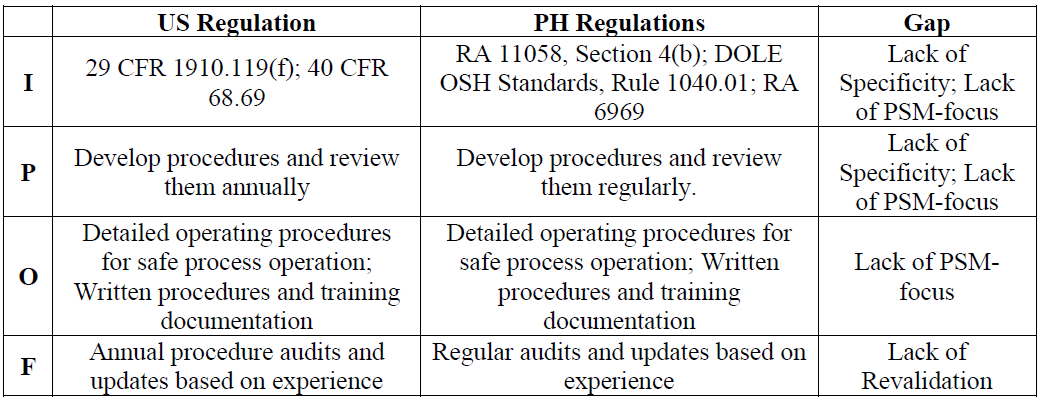
Training. Philippine regulations on training mandate initial and refresher training and emphasize maintaining training records and documentation of competence. However, unlike US OSHA and EPA RMP standards, which specify intervals for refresher training (every three years) and annual evaluations, Philippine regulations use more general terms like “regular” without specifying exact intervals.
Table 6. Training Gap Analysis Results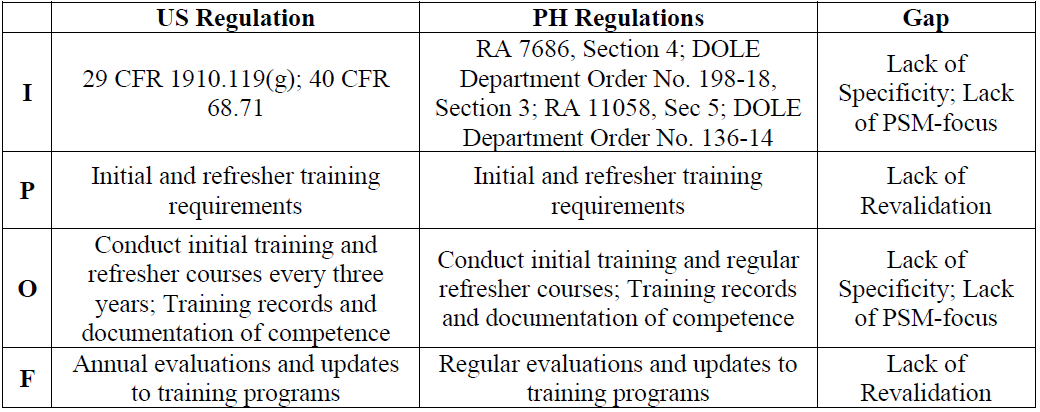
Contractors. Philippine regulations on contractor safety mandate requirements for contractor safety, orientations, and performance reviews, emphasizing the need for maintaining records and conducting regular evaluations. However, unlike US OSHA standards, which specify annual evaluations and quarterly reviews, Philippine regulations use more general terms like “regular” without specifying exact intervals.
Table 7. Contractors Gap Analysis Results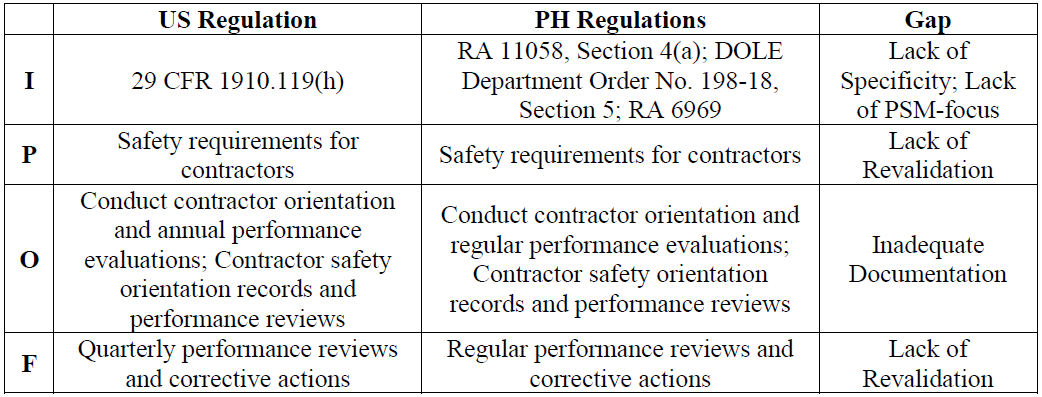
Pre-startup Safety Review. Philippine regulations do not specifically address the requirements for Pre-startup Safety Review (PSSR), unlike the US OSHA and EPA RMP standards, which mandate detailed reviews before the startup of new or modified processes. The absence of PSSR requirements in Philippine regulations creates a significant gap in ensuring process safety compliance during the critical phase of starting up new or modified processes.
Table 8. Pre-startup Safety Review Gap Analysis Results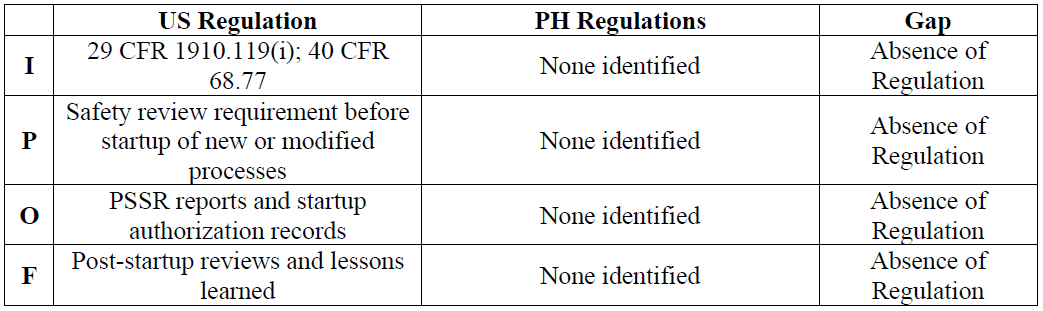
Mechanical Integrity. US OSHA and EPA RMP regulations mandate comprehensive mechanical integrity programs covering all process equipment, with regular inspections, testing, and detailed documentation based on manufacturer recommendations. Philippine regulations, such as RA 6541 and DOLE guidelines, focus on specific equipment types like boilers, pressure vessels, and combustion engines, resulting in a narrower scope. This highlights the need for Philippine regulations to adopt broader, more comprehensive mechanical integrity requirements similar to US standards, enhancing safety and reliability across industries.
Table 9. Mechanical Integrity Gap Analysis Results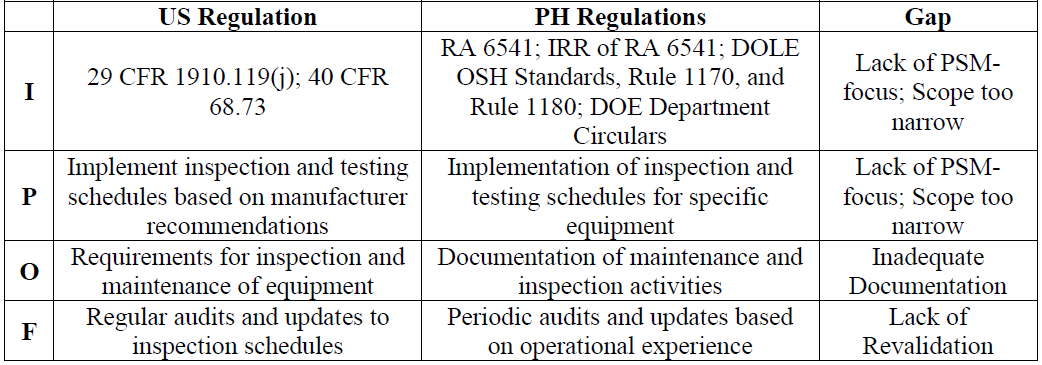
Hot Work. There are no significant gaps between US OSHA/EPA RMP standards and Philippine regulations regarding hot work permits. Both sets of regulations require permits, daily monitoring, maintaining records, and periodic audits and reviews after incidents, ensuring comprehensive safety measures are in place for hot work operations.
Table 10. Hot Work Gap Analysis Results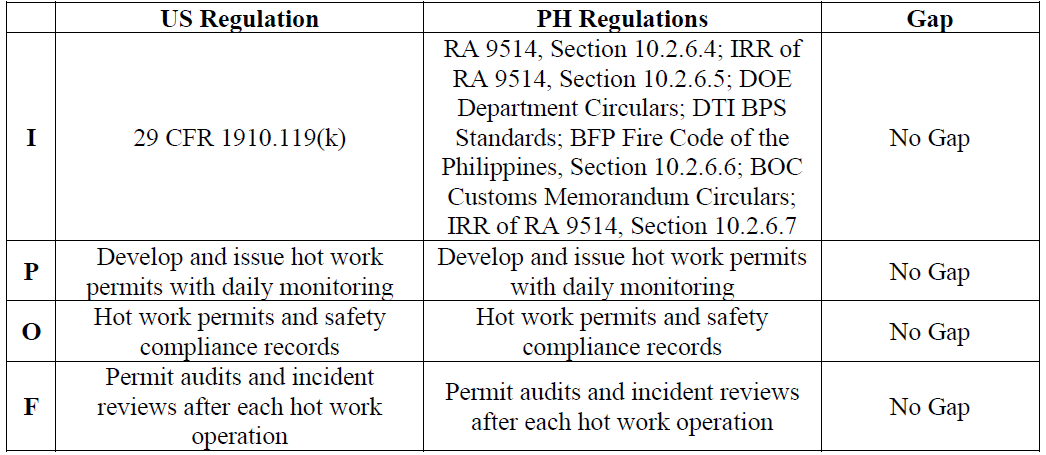
Management of Change. Philippine regulations currently lack specific and detailed requirements for Management of Change (MOC) programs, in contrast to the comprehensive MOC requirements outlined by US OSHA and EPA RMP standards. US regulations mandate detailed procedures, timely updates to safety information, thorough documentation, and regular reviews, while Philippine regulations do not provide specific guidelines for MOC, leading to gaps in specificity, documentation, and revalidation.
Table 11. Management of Change Gap Analysis Results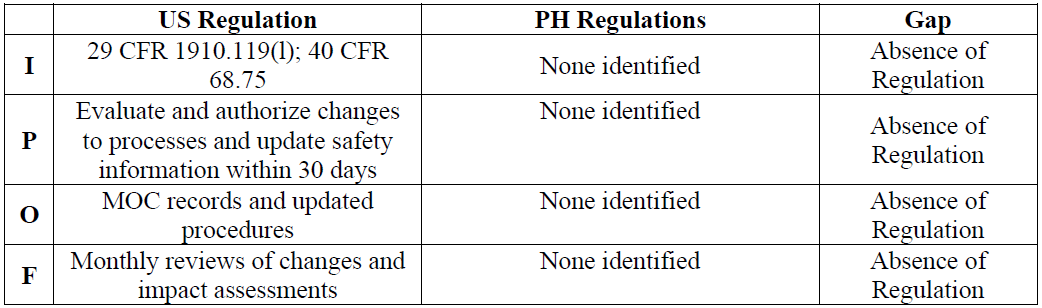
Incident Investigation. Philippine regulations primarily address incidents involving dangerous drugs and explosives, focusing on public safety rather than process safety management (PSM). These regulations provide broad guidelines for incident investigation but lack the specificity and detailed requirements found in US OSHA and EPA RMP standards. US regulations mandate investigations within 48 hours, comprehensive root cause analysis, detailed incident reports, and quarterly trend analysis, whereas Philippine regulations do not specify such strict timeframes or detailed procedures.
Table 12. Incident Investigation Gap Analysis Results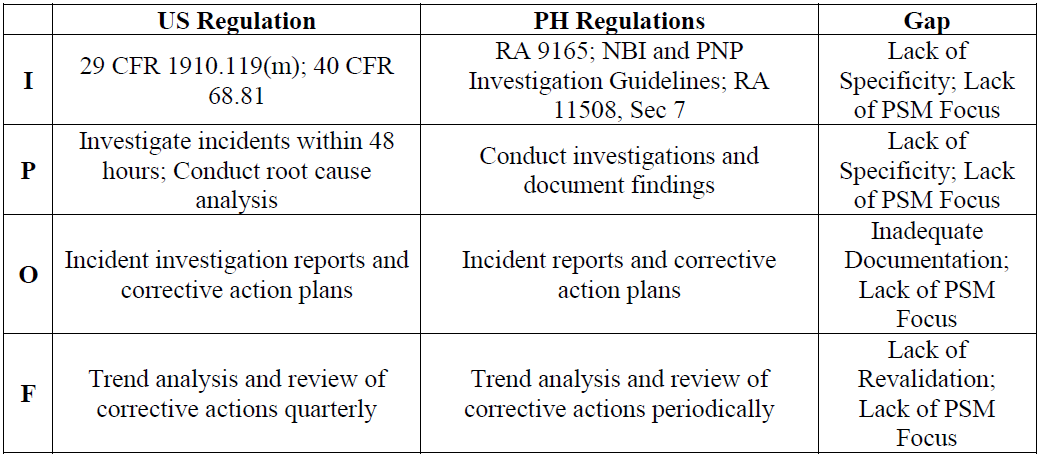
Emergency Planning and Response. Philippine regulations on emergency planning and response mandate the development of comprehensive response plans and require regular drills and evaluations, focusing primarily on fire drills and natural calamities. However, unlike US OSHA and EPA RMP standards, which specify annual drills and detailed post-drill evaluations, Philippine regulations use more general terms like “regular” without specifying exact intervals or the depth of required evaluations, and do not emphasize chemical-related emergencies.
Table 13. Emergency Planning and Response Gap Analysis Results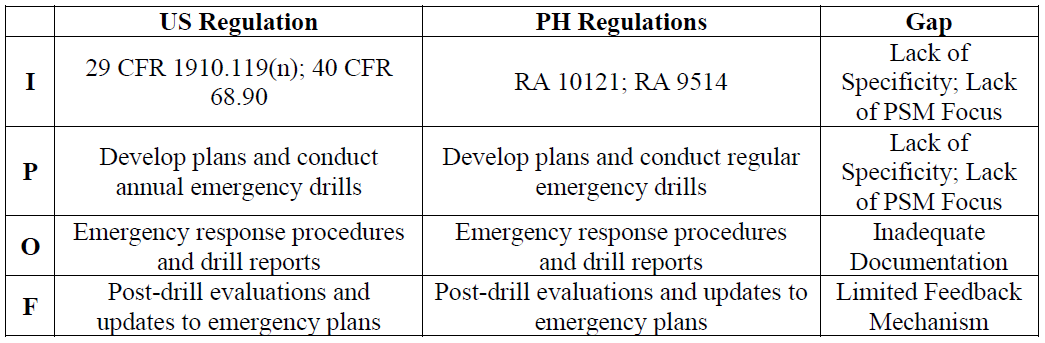
Compliance Audit. Philippine regulations mandate regular safety and health audits to ensure compliance but do not specify a three-year interval as required by US OSHA and EPA RMP standards.
Table 14. Compliance Audit Gap Analysis Results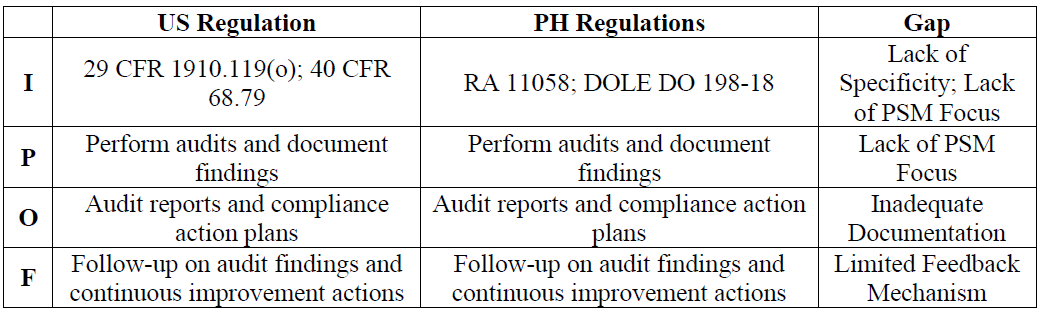
Trade Secrets. Philippine regulations provide a broad framework for protecting confidential information, primarily focusing on intellectual property and research confidentiality. In contrast, US OSHA and EPA RMP regulations specifically address the protection of trade secrets within the context of process safety management.
Table 15. Trade Secrets Gap Analysis Results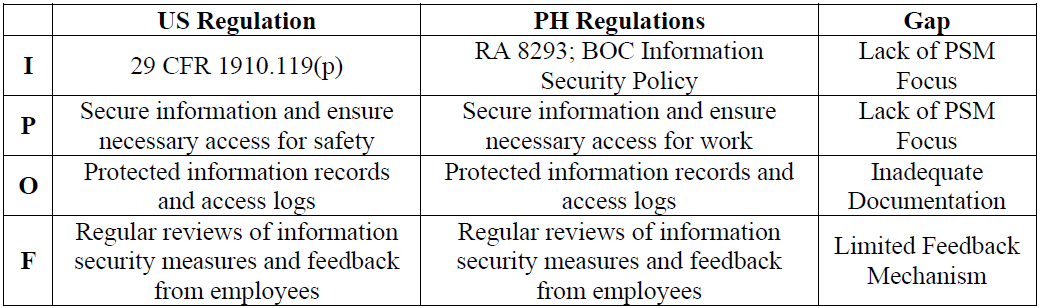
Summary
The gap analysis between US OSHA/EPA RMP standards and Philippine regulations reveals several general gaps that need to be addressed to enhance process safety management (PSM) in the Philippine chemical process industry:
- Lack of Specificity:
- Philippine regulations often lack detailed and specific requirements found in US standards. For example, US regulations mandate specific intervals for Process Hazard Analyses (PHAs), training refreshers, and compliance audits, while Philippine regulations typically use more general terms such as “regular” without defining exact frequencies. This lack of specificity can lead to inconsistencies and gaps in safety practices.
- Inadequate Documentation:
- US regulations emphasize comprehensive documentation across various elements, including incident investigations, compliance audits, and contractor safety programs. In contrast, Philippine regulations often lack detailed documentation requirements, leading to potential gaps in traceability and accountability. This inadequacy in documentation can hinder effective safety management and regulatory compliance.
- Lack of Process Safety Management (PSM) Focus:
- Philippine regulations, such as those governing hazardous chemicals and incident investigations, often focus more on general occupational safety or public safety rather than specific PSM concerns like preventing fires, explosions, and toxic releases. This broader focus results in fragmented safety management efforts and reduced effectiveness in addressing process-specific hazards.
- Limited Feedback Mechanisms:
- While US regulations require detailed and frequent reviews, updates, and revalidations of safety procedures and training programs, Philippine regulations are less explicit about these feedback mechanisms. The absence of regular revalidation and continuous improvement cycles can lead to outdated safety practices and reduced effectiveness in mitigating risks.
- Absence of Specific Regulations:
- Certain critical areas, such as Pre-startup Safety Reviews (PSSR) and Management of Change (MOC), are not specifically addressed in Philippine regulations. The absence of these detailed requirements creates significant gaps in ensuring process safety during critical operational phases and changes.
Conclusion
The analysis highlights that while Philippine regulations cover general safety and health standards, they fall short in specific areas crucial for effective process safety management (PSM) compared to US OSHA/EPA RMP standards. By utilizing the Systems Theory of Compliance, which involves inputs, processes, outputs, and feedback mechanisms, this study underscores the following:
- Inputs:
- Detailed regulatory requirements are essential. Philippine regulations must incorporate specific mandates similar to those in the US for conducting PHAs, training refreshers, and compliance audits at defined intervals.
- Processes:
- Implementation activities must be clear and actionable. Philippine regulations should outline detailed procedures for safety practices, including contractor safety, mechanical integrity, and hot work permits.
- Outputs:
- Comprehensive documentation and record-keeping are critical for transparency and accountability. Philippine regulations need to mandate detailed records of safety procedures, audits, and training programs.
- Feedback:
- Continuous improvement through regular revalidation and updates is vital. Philippine regulations must specify the need for frequent reviews and updates based on audit findings, incident investigations, and evolving safety standard.
Recommendations
To bridge the identified gaps and improve process safety management in the Philippine chemical process industry, the following recommendations are proposed:
- Adopt a Structured Compliance Framework:
- Implement frameworks such as the Plan-Do-Check-Act (PDCA) cycle or ISO 45001, which provide structured approaches to managing safety, ensuring continuous improvement, and enhancing regulatory compliance. These frameworks can help establish clear guidelines and periodic reviews to maintain effective safety practices.
- Enhance Specificity in Regulations:
- Amend Philippine regulations to include specific intervals for reviews, audits, and training, aligning with US standards. Clearly defined frequencies for PHAs, training refreshers, and compliance audits can ensure consistency and thoroughness in safety practices.
- Improve Documentation and Record-Keeping:
- Mandate comprehensive documentation and record-keeping practices across all elements of process safety management. This includes detailed logs of safety procedures, training records, audit findings, and incident reports to improve traceability and accountability.
- Emphasize Process Safety Management (PSM):
- Focus on specific PSM concerns such as preventing fires, explosions, and toxic releases within the regulatory framework. This can include adopting detailed guidelines for MOC, PSSR, and incident investigations to ensure a comprehensive approach to process safety.
- Regular Revalidations and Updates:
- Implement requirements for regular revalidations of safety procedures, hazard analyses, and training programs. Regular updates based on feedback from audits and incident reviews can ensure that safety practices remain current and effective.
- Develop Regulatory Green Lanes:
- Establish regulatory green lanes for the chemical process industry to promote efficient compliance processes, reduce bureaucratic delays, and encourage proactive safety management practices.
By adopting these recommendations, the Philippines can enhance its regulatory framework, ensuring better process safety management, reducing industrial incidents, and protecting both people and the environment. This alignment with international standards will foster a culture of safety, accountability, and sustainability within the Philippine chemical process industry.
References
[1] Center for Chemical Process Safety (CCPS). (2007). Guidelines for Risk Based Process Safety. John Wiley & Sons.
[2] Nakagawa, M. (2019). Framework of Japanese Management System. Chemical Engineering Transactions, 77, 565-570. DOI: 10.3303/CET1977095 Microsoft Word – 1.docx (aidic.it)
[3] Republic Act No. 11058.pdf (legacy.senate.gov.ph)
[4] Saura, M., Dela Cruz, R., Mendoza, M., & Ahiyal, A. (2023). Process Safety Management Systems in Chemical Process Industries in the Philippines.
[5] Annex-1-FY-2021-Master-List-of-Departments-and-Agencies.docx.pdf (dap.edu.ph)
[6] Chapter-06.pdf (neda.gov.ph)
[9] Process Safety Management (PSM) | California, USA (saltegra.com)
[10] A Systems Theory of Compliance Law (core.ac.uk)
[11] A socio‐economic theory of regulatory compliance | Emerald Insight


